Explainer
Can you reuse rock tumbling grit, slurry or media?
Published
Short answer
No. Rock tumbling grit cannot be reused. Silicon carbide breaks down as it works, and after about 7 days in the barrel the coarse grit (step 1, 60/90) is spent mud with no cutting power left. What you can reuse is the filler: ceramic media after a rinse, and plastic pellets in the same grit step only. Used polish slurry is sometimes kept, at the risk of contamination.
The question usually comes up at the first cleanout, when a week of grit goes into the bucket as gray mud and the next step needs a fresh measure. The answer is different for each thing in the barrel. Grit is consumed. Slurry is waste, with one small exception. Media lasts for many batches if it is kept clean and sorted by step. The table gives the verdict for each item, and the sections after it explain why grit wears out and where reuse puts the polish at risk.
Is rock tumbler grit reusable? The verdict for each item
The short rule: anything that did the cutting is used up, and anything that only filled space or cushioned the stones can go around again. The risk in every reuse is the same one, coarser particles reaching a finer step.
| Item | Reuse? | Condition |
|---|---|---|
| Coarse grit (step 1, 60/90) | No | Spent after about 7 days. Every repeat of step 1 needs fresh grit |
| Medium grit (step 2, 150/220) | No | Worn down to fine mud by the end of the run |
| Fine grit (step 3, 500 or 600) | No | Spent, and mixed with rock dust that cannot be separated |
| Slurry from steps 1 to 3 | No, one exception | A spoonful of old step 1 slurry can thicken a new step 1 load. Never in a finer step |
| Polish slurry (step 4) | Sometimes | Only from a clean, scratch-free batch, kept sealed. Risk of contamination |
| Ceramic media | Yes | Rinse clean. Many hobbyists keep a separate batch for polish |
| Plastic pellets | Yes, same step only | Grit embeds in them. Keep one labeled batch per grit step |
Why rock tumbler grit breaks down during a run
Silicon carbide is about Mohs 9 to 9.5, hard enough to cut quartz-hardness rocks at Mohs 7. Fresh grit is made of sharp, angular grains. As the barrel turns, the grains crack, lose their edges and get smaller. By the end of a week the 60/90 grit you measured in has become a fine gray paste mixed with rock dust.
That breakdown is part of how each step works. The grit starts aggressive and ends fine, so the stones leave the step smoother than they entered it. It also means the used mud has nothing left to give a new load. Pouring it back in adds thickness to the water but almost no cutting.
How long does rock tumbler grit last?
In a rotary barrel, one charge of grit lasts one run of about 7 days. Step 1 is often repeated 2 to 4 times on hard, jagged rough, and each repeat takes a fresh charge of about 2 level tablespoons per pound of rock. The grit calculator gives the amount for your barrel. A vibratory tumbler runs steps 2 to 4 in about 2 to 3 days each and uses much less grit, but that grit is spent too.
On the shelf, dry unused grit does not wear out. It is a mineral powder. Keep each size in a sealed, labeled container and use a separate spoon for each, so coarse grains never end up in the fine grit or the polish.
Note.If you can still feel sharp grit in the slurry after a week, close the barrel and run a few more days. That is finishing the run, not reusing grit.
Can you reuse rock tumbler slurry?
Slurry from steps 1 to 3 is waste. The one use some hobbyists make of it is to add a spoonful or two of old step 1 slurry to a new step 1 load, which thickens the water sooner so grit clings to the stones. It does not replace any of the fresh grit. Slurry never moves forward to a finer step, because it carries the coarser particles that scratch.
Used polish slurry is sometimes kept in a sealed jar and reused, since polish powder is very fine to begin with. The risk is contamination: if the batch it came from shed a chip or carried a grain of grit, the saved slurry will scratch the next batch. Fresh polish is the safer choice when a batch has come out not shiny before.
Note.Never pour slurry down a drain. It settles like concrete. Let it settle or dry in a bucket and put the solids in the trash.
Can you reuse rock tumbler media?
Yes. Media is filler, not abrasive, so it does not get used up the way grit does. The two kinds follow different rules, and ceramic media vs plastic pellets covers when to pick each.
- Ceramic media is hard and non-porous. Rinse it with the stones in a colander over a bucket and it can go into any step. Many hobbyists keep a separate batch that is only used for polish.
- Plastic pellets hold grit in their surface. A batch used in coarse grit stays in coarse grit for good. Skim the floating pellets off the rinse water, dry them and store them in a container labeled with the step.
- Worn ceramic media gets smaller and rounder over many batches. Small pieces still work as filler until they are too small to strain out.
- Count media as rock when you measure grit for the next load.
How to use less grit without reusing it
Since used grit is gone, the savings are in how grit is bought, measured and kept clean. None of these habits cost any shine.
- Measure, do not pour. About 2 level tablespoons per pound of rock is enough in every step. Extra grit does not grind faster.
- Buy coarse grit by the pound. Step 1 uses the most because it is the step that repeats. See bulk coarse grit.
- Pick rough that is already partly rounded and free of deep pits, so step 1 needs fewer repeat runs.
- Keep media clean and sorted, so it lasts for many batches.
- Do not skip cleaning to save time. A contaminated polish run costs a repeat of step 3 and step 4, about two more weeks.
Quick answers
The reuse rules in one place. Grit and grinding slurry are single-use, media is reusable, and polish slurry is a judgment call.
- Can you reuse rock tumbler grit? No. Silicon carbide is spent after about 7 days in the barrel and has no cutting power left.
- How long does rock tumbler grit last? One run of about 7 days in a rotary tumbler. Dry unused grit keeps on the shelf if it stays sealed and labeled.
- Can you reuse rock tumbler media? Yes. Ceramic media can be rinsed and reused in any step. Plastic pellets must stay in the same grit step.
- Can you reuse rock tumbler slurry? Not grinding slurry. Polish slurry is sometimes kept and reused, at the risk of scratching the next batch.
- How do you reuse rock tumbler grit that is left over? Only unused dry grit carries over. Store it sealed, and measure a fresh charge for each run.
What you need for this
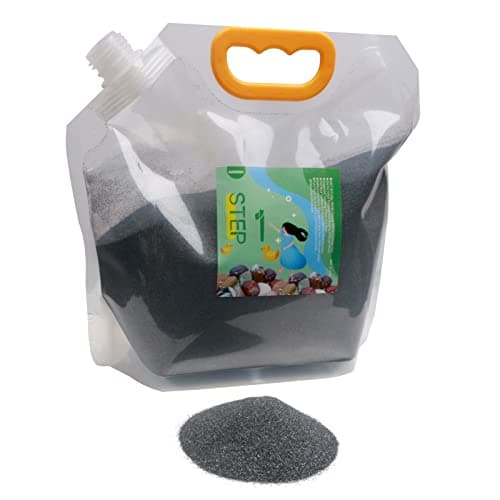 See price on AmazonAmazon
GANGOU coarse grit 60/90, 5 lb in resealable bags
From Best coarse rock tumbler grit: 60/90 silicon carbide for step 1
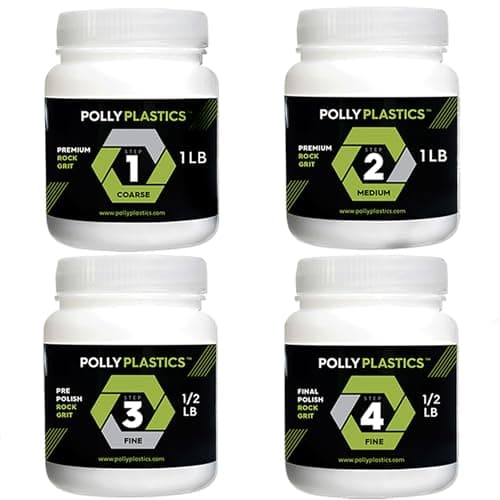 See price on AmazonAmazon
Polly Plastics 4-step grit and polish kit, 3 lb
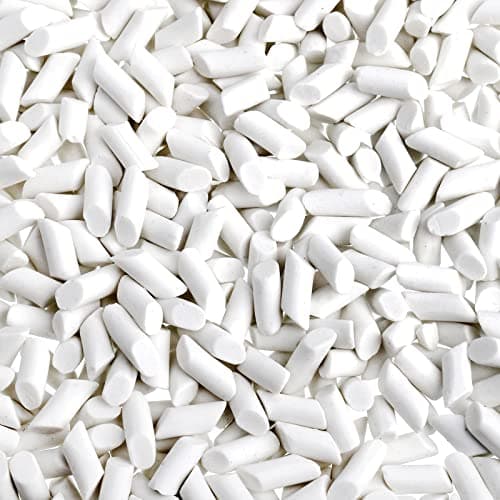 See price on AmazonAmazon
Hiceeden ceramic media, 1/5 x 2/5 in cylinders, 8 lb
From Best ceramic media for rock tumbling: sizes and how much to buy
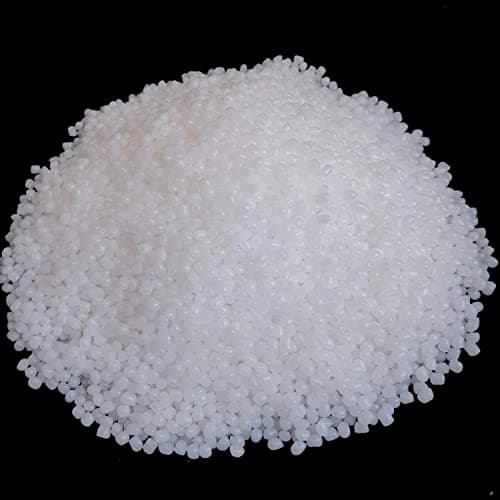 See price on AmazonAmazon
Tonmp plastic pellets tumbling media, 3 lb
From Best plastic pellets for rock tumbling and when to use them