Comparison
Ceramic media vs plastic pellets in rock tumbling: when to use each
Published
Short answer
Use ceramic media to bring an under-filled barrel up to about 2/3 full, to help the load roll and to carry grit into hollows. It works in every step, in rotary and vibratory tumblers, and can be rinsed and reused. Use plastic pellets when the job is cushioning: brittle stones such as obsidian, and the polish step in a rotary barrel. Pellets hold grit, so each batch stays in one grit step.
Media is filler. It is not grit and it does no cutting by itself. It matters at two moments: when a barrel is not full enough, and when stones come out chipped or bruised. A rotary barrel should run between 1/2 and 3/4 full. Stones lose volume in coarse grit (step 1, 60/90), so a load that started at the right level is often too low by step 2 or 3. Which filler goes in depends on what the load needs, more grinding contact or a softer ride.
Ceramic media vs plastic pellets, row by row
Both fillers raise the level in the barrel. The differences are in what else they do, where they can be used and how they are reused.
| Feature | Ceramic media | Plastic pellets |
|---|---|---|
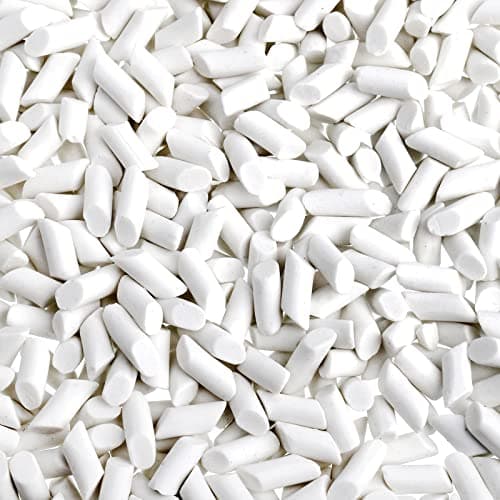
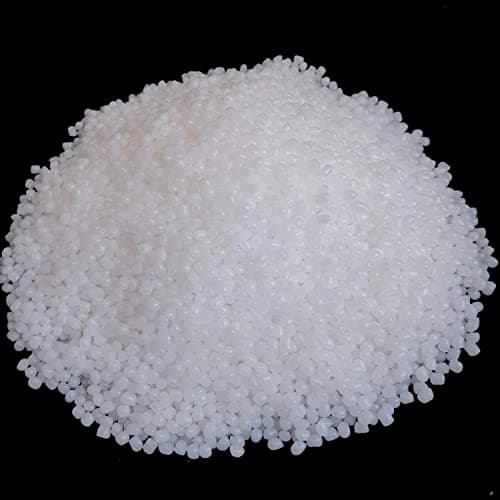
| What it is | Small non-abrasive ceramic cylinders or shapes, about as hard as quartz | Light plastic beads that float in water |
| Main job | Fills the barrel, improves the rolling action, carries grit into hollows | Cushions stones and softens impacts |
| Effect on grinding | Adds contact points, so grit reaches more of each stone | None. Cushioning only |
| Tumbler type | Rotary and vibratory | Rotary. Pellets bounce too much in a vibratory bowl |
| Reuse | Rinse and reuse in any step. Many keep a separate batch for polish | Same grit step only. Grit embeds in the plastic |
| Cleanout | Sinks with the stones. Rinse both together in a colander | Floats. Skim off the rinse water with a strainer |
Which media to use in each step, and how much
The target is the fill level, not a fixed weight of media. Load the rocks, then add media until the barrel is about 2/3 full. The percentages below are the share of the load by volume and are ranges, because rough differs from batch to batch.
| Step | Tumbler | Media | How much |
|---|---|---|---|
| Step 1 coarse, hard rock | Rotary | Ceramic, only if needed | None to about 10%. Mixed rock sizes do most of the work |
| Steps 2 and 3 | Rotary | Ceramic | Enough to bring the barrel back to about 2/3 full |
| Step 4 polish | Rotary | Ceramic kept for polish, or plastic pellets | Enough to reach about 2/3 full |
| Any step, brittle stones | Rotary | Small ceramic or plastic pellets | About 10% to 50%. Fill toward 3/4 for obsidian and glass |
| Steps 2 to 4 | Vibratory | Ceramic | Enough small media to fill the gaps. Follow the bowl maker's chart |
| Burnish | Rotary or vibratory | The clean media from polish | Same level as the polish step |
What is rock tumbling media and what does it do?
Rock tumbling media is anything added to the barrel that is neither rough, grit nor water. It does four jobs. It fills space so the barrel runs at the right level. It evens out the mix of sizes so the load rolls instead of sliding. It cushions stones against each other. And small pieces press grit into pits and concave faces that large stones cannot reach.
Below half full, stones fall and slam, which chips edges and leaves white bruises that show up after polish. That is one of the causes covered in why tumbled rocks are not shiny. Above 3/4 the load cannot tumble at all.
Choose ceramic media when
Ceramic is the general-purpose filler. Pick it whenever the load needs volume or better grinding contact more than it needs softness.
- The barrel has dropped below about 2/3 full after step 1 and there are no extra stones at the same stage to add.
- The load is a few large stones, or all one size. Small ceramic pieces between them make the load roll.
- The stones have hollows, pits or concave faces that need grit carried into them.
- You run a vibratory tumbler for steps 2 to 4.
- You want one filler that rinses clean and can move through every step with the stones.
Choose plastic pellets when
Pellets are the cushioning filler for rotary barrels. Pick them when impact damage is the problem and grinding speed is not.
- The stones are brittle: obsidian, glass, or quartz that is chipping at the edges. See tumbling obsidian for the full schedule.
- Stones come out of fine grit or polish with white bruises even though the barrel was at 2/3.
- The barrel is near its weight rating and needs volume without much added weight.
- You can keep one labeled batch for each grit step and never move a batch to a finer step.
How to use ceramic rock tumbling media
Media goes in with the rocks and is measured as part of the load. Count it as rock when you work out the grit, and treat it like the stones at cleanout.
- 1
Load the rocks, then pour in media until the barrel is about 2/3 full. A mix of small and larger pieces fills gaps better than one size.
- 2
Add grit at about 2 level tablespoons per pound of load, media included. The grit calculator gives the amount by barrel size.
- 3
Add water to just below the top layer and run the step for its normal time, about 7 days in a rotary tumbler.
- 4
At cleanout, rinse stones and ceramic together in a colander over a bucket. Skim floating pellets off the water first if you used them.
- 5
Run brand-new ceramic media through a coarse or medium step before it goes into fine grit or polish, so its sharp edges are worn smooth.
Note.Never rinse slurry into a sink. It settles like concrete in the drain. Rinse over a bucket and put the settled solids in the trash.
Rock tumbling media substitutes and reuse rules
The usual substitute for bought media is more rock. Small pieces of rough, or small stones from an earlier batch at the same step, fill the barrel and cushion the load as long as they are the same hardness as the rest. Never top up with softer or harder stones, and never with stones from a coarser step.
Both fillers last for many batches. Ceramic is hard and non-porous, so a rinse is enough. Pellets carry grit in their surface, which is why a batch used in coarse grit can never go into polish. Can you reuse rock tumbling grit has the full list of what can and cannot go around again.
Quick answers
The short rules for filler in a rock tumbler: ceramic for volume and grinding contact, pellets for cushioning, and 2/3 full either way.
- How much ceramic media for rock tumbling? Enough to bring the barrel to about 2/3 full. That is often up to 10% of a hard-rock load and 10% to 50% for fragile stones.
- What is the best rock tumbling media? Ceramic for most loads, because it works in every step and both tumbler types. Plastic pellets for brittle stones in a rotary barrel.
- Can you tumble rocks with ceramic media in every step? Yes. Rinse it between steps, and keep a separate batch for polish if you can.
- Do you add extra grit for the media? Count media as rock. Use about 2 level tablespoons of grit per pound of load.
- Can plastic pellets go from step 2 to polish? No. Grit embeds in them. Keep one batch per grit step.
What you need for this
 See price on AmazonAmazon
Hiceeden ceramic media, 1/5 x 2/5 in cylinders, 8 lb
From Best ceramic media for rock tumbling: sizes and how much to buy
 See price on AmazonAmazon
Tonmp plastic pellets tumbling media, 3 lb
From Best plastic pellets for rock tumbling and when to use them
 See price on AmazonAmazon
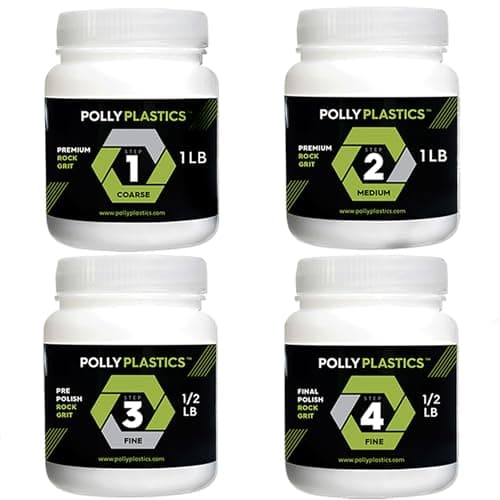
Polly Plastics 4-step grit and polish kit, 3 lb