Fix
Why your tumbled rocks are not shiny and how to fix each cause
Published
Short answer
Tumbled rocks come out dull mostly because the fine grit step (step 3, 500 or 600) was cut short or because coarser grit was carried into the polish barrel. Polish cannot remove scratches. Go back to fine grit for a full 7 days, scrub the stones, barrel, lid and seal, then polish for 7 to 10 days. A cloudy film on smooth stones needs only a soap burnish.
Polish (step 4) does no grinding. It only brightens a surface that is already smooth, so a dull batch points to something that happened in an earlier step or to something that got into the barrel. Dry a few stones and look at them under a bright light before you change anything. Haze, scratches, dull pits, white bruises and a wipe-off film each have a different cause, and each sends you back to a different step.
Why are my tumbled rocks dull? Match what you see to the cause
Check the stones dry, because wet stones always look shiny. The rows run from most likely to least likely, and the last column names the step to go back to. Step numbers follow the rock tumbling grit chart.
| What you see | Likely cause | What to do |
|---|---|---|
| Even haze or satin look on every stone, no single scratches | Fine grit (step 3) cut short | Repeat step 3 for a full 7 days, clean everything, then polish 7 to 10 days |
| Fine random scratches on stones that are otherwise glossy | Grit carried over into polish, or a cracked stone shedding grit | Scrub barrel, lid and seal. Go back to step 3, or step 2 if a fingernail catches |
| Shiny high spots, dull pits, cracks and flat broken faces | Step 1 ended too early | Return those stones to coarse grit (step 1) until rounded and pit-free |
| Some stones shine, others from the same barrel stay dull | Mixed hardness, or a rock type that will not polish | Sort by hardness. Re-run softer stones alone. Leave out grainy rock |
| White crescent marks, frosted edges or small chips | Bruising from an under-filled barrel | Fill to about 2/3 with media, repeat step 3, then polish |
| Smooth stones with a cloudy film that rubs brighter with a cloth | Polish or hard-water film | Burnish with bar soap or borax for 1 hour to 1 day. No step to repeat |
| Clean, scratch-free stones that are only semi-gloss | Too little polish or a short polish run | Repeat step 4: about 2 tablespoons of polish per pound, 7 to 10 days |
Note.Rule of thumb: if a dry stone does not look satin and feel silky after step 3, it will not shine after step 4.
Causes 1 and 2: fine grit cut short, or step 1 ended too early
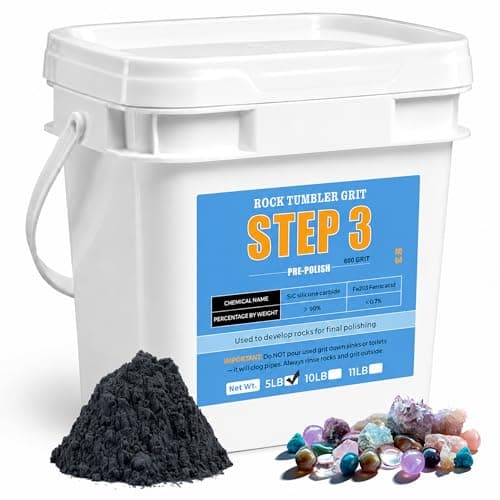
Cause 1 is the most common. Fine grit (step 3, 500 or 600) has to remove every scratch left by medium grit, and that takes about 7 days. Stop early and the polish sits on a finely scratched surface, so the whole batch looks hazy. The fix is a full week back in fine grit, with about 2 level tablespoons per pound of rock, then a clean polish run. The grit calculator gives the amount for your barrel.
Cause 2 shows as stones that shine on the high spots but stay dull in pits, cracks and flat broken faces. Only step 1 changes the shape, so no later step can reach those low spots. Put the affected stones back in coarse grit (60/90) for 7-day runs until they are rounded and pit-free. Hard, jagged rough often needs 2 to 4 runs. See how long to tumble rocks for each step.
Cause 3: grit carried over into polish leaves scratched stones
One grain of coarse grit in the polish barrel scratches the whole batch. Carry-over hides in the lid seal, in pits in the stones and in plastic pellets used in an earlier step. The scratches run in random directions on stones that are otherwise glossy. Clean first, then decide how far back to go.
- 1
Rinse the stones in a bucket, not the sink. Scrub pitted stones with an old toothbrush until no gray mud comes out.
- 2
Pull the lid seal out and wash the seal, lid and barrel rim. Wipe inside the barrel until a paper towel comes away clean.
- 3
Judge a dry stone. Fine hairlines: repeat fine grit (step 3) for 7 days. Scratches a fingernail catches on: medium grit (step 2) for about 7 days, then step 3.
- 4
Polish again for 7 to 10 days with fresh polish and, if you use plastic pellets, a batch kept only for polish.
Causes 4 and 5: mixed hardness, or a rock that will not polish
When some stones shine and others from the same barrel stay dull, the load was mixed. Hard stones around Mohs 7 (agate, jasper, quartz) grind softer ones such as fluorite (4) or calcite (3) and keep them scratched right through polish. Sort the batch with the hardness chart and run softer stones as their own load on a gentler schedule.
Some rocks will not take a shine at any step. Grainy, porous or weathered rock such as sandstone sheds particles and stays matte, and those particles dull the good stones around it like stray grit. Rub two dry stones together hard. If grains come off, leave that rock out.
Cause 6: rock tumbling bruising from an under-filled barrel
Bruises are impact marks: small white crescents, frosted edges or tiny chips. They show most on quartz, agate and brittle stones such as obsidian. They happen when the barrel is below half full, so the stones fall and slam instead of rolling. Stones lose volume in step 1, so a barrel loaded to 2/3 at the start can be close to half by step 3.
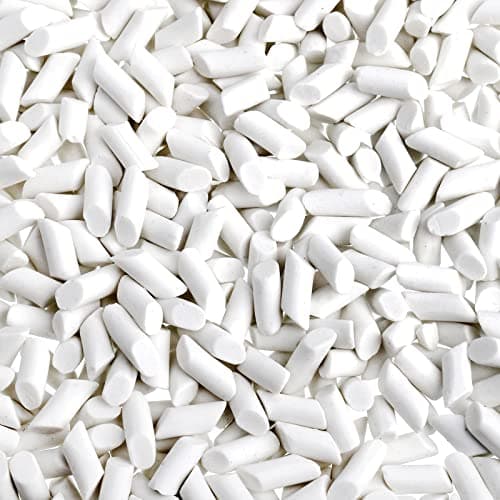
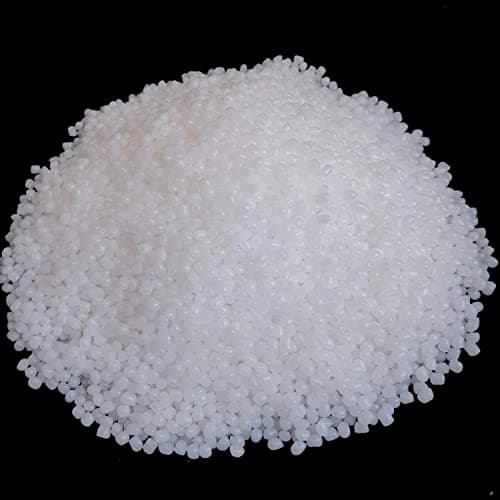
Bring the load back to about 2/3 full at every step with ceramic media, or with plastic pellets for fragile stones. Bruised stones need step 3 again, and chipped ones need step 1. Ceramic media vs plastic pellets explains which filler suits which step.
Cause 7: cracked stones that shed grit into the polish
Cracks and hollow pockets trap coarse grit and release it days later. Fractured stones can also break during a run and send sharp fragments around the barrel. Either way the batch ends up scratched even though the barrel was clean. Inspect every stone after step 1 and again before polish. A stone with an open crack goes back to coarse grit, gets broken along the crack and reshaped, or is left out.
Causes 8 and 9: a film that needs burnishing, or too little polish
A film is the easy case. The stones are smooth and scratch-free but look cloudy when dry, and a hard rub with a cloth brightens them. That is dried polish or hard-water residue. Burnish in a clean barrel with about half a tablespoon of grated plain bar soap or borax per pound of rock, for 1 hour to 1 day, until the rinse water runs clear. The method is in burnishing tumbled rocks.
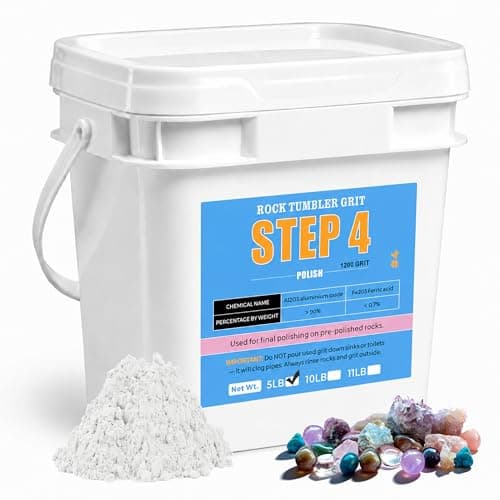
If clean stones are still only semi-gloss, look at the polish run. Use about 2 level tablespoons of polish per pound of rock and run 7 to 10 days. A kit packet is a fixed amount, so check it against that rule for the load in your barrel. Aluminum oxide is the common polish.
How to make tumbled rocks shiny on the next batch
Most dull batches come from moving to the next step by the calendar instead of by the look of the stones. These five checks cover all nine causes.
- Tumble one hardness per load, and leave out grainy, porous or cracked rough.
- Stay in coarse grit until every stone is rounded with no pits, cracks or flat faces.
- Keep the barrel between 1/2 and 3/4 full at every step. Top up with media as the stones shrink.
- Clean stones, barrel, lid and seal between every step, and keep separate pellets for polish.
- Start polish only when dry stones look satin and feel silky, then finish with a soap or borax burnish.
Quick answers
Short answers to the common questions about dull tumbled stones. Each one points back to a cause covered in the sections above.
- How do you make rocks shiny after tumbling? Burnish them with grated bar soap or borax for 1 hour to 1 day. If they stay dull, repeat fine grit (step 3) for 7 days and polish again.
- Why are my tumbled rocks not polishing at all? The rock is usually too soft, grainy or porous to polish, or it was mixed with harder stones. Sort by hardness and re-run.
- What does rock tumbling bruising look like? Small white crescents, frosted edges or chips, caused by stones hitting each other in a barrel that is under half full.
- Do I have to start over from step 1? Only stones with pits, cracks or chips. Hazy or lightly scratched stones go back to step 3, and a film needs only a burnish.
What you need for this
 See price on AmazonAmazon
KomeStone 1200 aluminum oxide polish, step 4, 5 lb
 See price on AmazonAmazon
KomeStone pre-polish grit 600, step 3 refill, 5 lb
 See price on AmazonAmazon
Hiceeden ceramic media, 1/5 x 2/5 in cylinders, 8 lb
From Best ceramic media for rock tumbling: sizes and how much to buy
 See price on AmazonAmazon
Tonmp plastic pellets tumbling media, 3 lb
From Best plastic pellets for rock tumbling and when to use them