How-to
How long to tumble rocks: time for each stage and the full run
Published
Short answer
A full batch of hard rock takes 4 to 6 weeks in a rotary tumbler: about 7 days each in coarse, medium and fine grit, then 7 to 10 days in polish. Jagged rough often needs 2 to 4 coarse runs of 7 days each, which is where the extra weeks come from. In a vibratory tumbler, steps 2 to 4 take about 2 to 3 days each.
The tumbler runs day and night for the whole time, so the weeks cost little work: a rinse and a reload at each grit change. What stretches the schedule is almost always step 1. Coarse grit has to grind every stone round and remove every pit, and how long that takes depends on how hard the rock is and how rough it was at the start. The later steps are predictable. The times below are for hard rock around Mohs 7 in a rotary barrel, with notes for softer stones, kit tumblers and vibratory bowls.
How long does each stage take? Rock tumbling time chart
Each stage is a separate run with its own grit. The days in the chart are typical ranges, not targets. A stage ends when the stones pass the check for that stage, and the calendar only tells you when to look. Grit grades and amounts for the same steps are in the rock tumbling grit chart.
| Stage | Rotary tumbler | Vibratory tumbler | What changes the time |
|---|---|---|---|
| Step 1, coarse grit | 7 days per run, often 2 to 4 runs | Not done in a vibratory bowl | Hardness and starting shape of the rough |
| Step 2, medium grit | About 7 days | About 2 to 3 days | Little, if step 1 was finished properly |
| Step 3, fine grit (pre-polish) | About 7 days | About 2 to 3 days | Little. Cutting it short is the usual cause of a dull polish |
| Step 4, polish | 7 to 10 days | About 2 to 3 days | Little. Extra days rarely fix a dull batch |
| Step 5, burnish (optional) | 1 hour to 1 day | Short run, see the bowl maker's chart | Stops when the rinse water runs clear |
How long does a rock tumbler take from start to finish?
Add up the stages and a batch that needs one coarse run finishes in about 4 weeks. Each repeat of step 1 adds 7 days. That is why the usual answer is 4 to 6 weeks, and why a barrel of sharp, broken rough can take 7 weeks or more. Stones that water has already rounded, such as beach or river pebbles, sit at the short end because part of the shaping is done.
| Coarse runs needed | Days in step 1 | Total running time |
|---|---|---|
| 1 run | 7 days | 28 to 31 days, about 4 weeks |
| 2 runs | 14 days | 35 to 38 days, about 5 weeks |
| 3 runs | 21 days | 42 to 45 days, about 6 weeks |
| 4 runs | 28 days | 49 to 52 days, about 7 weeks |
How long to tumble rocks in stage 1
Step 1 is the only step that changes the shape, so it sets the length of the whole run. Two things decide it. Harder rock grinds more slowly, and rough with sharp edges, deep pits or flat broken faces has more material to lose before it is round. Rocks of mixed hardness should not share a barrel at all. Look up the Mohs number in the hardness chart before you plan the schedule.
| Rock | Mohs | Step 1 in a rotary tumbler |
|---|---|---|
| Agate, jasper, chalcedony, petrified wood | About 7 | 7 days per run. Jagged rough often needs 2 to 4 runs |
| Quartz, amethyst, rose quartz, aventurine, tiger's eye | About 7 | Same schedule as agate |
| Feldspars: moonstone, labradorite, amazonite | 6 to 6.5 | Slightly softer, so shaping tends to finish sooner. Check before repeating a run |
| Obsidian and glass | 5 to 5.5 | Brittle. Check more often than weekly, with a fuller barrel and cushioning media |
| Fluorite, malachite, calcite | 3 to 4 | Own load and a gentler schedule. Many hobbyists skip coarse grit |
Note.A longer single run is not a substitute for a second run. After about a week the coarse grit has broken down into spent mud and has stopped cutting, so the load needs a rinse and a fresh charge.
How to tell a stage is finished
The check is the same routine at the end of every run. It takes longer after step 1, because every stone has to be looked at one by one. The later steps can be judged from a handful.
- 1
At day 7, open the barrel carefully, pointed away from you, and pour the load into a colander over a bucket. Never rinse slurry down a drain.
- 2
Rinse the stones clean, then dry a handful with a towel and wait a few minutes. Wet stones look finished at every step and hide scratches and pits.
- 3
After step 1, check each stone under a bright light. It passes when it is rounded, with no pits, cracks or flat broken faces. Stones that fail go back for another 7 days.
- 4
After step 2, the stones should be smooth and evenly matte with no coarse scratches. After step 3, dry stones look satin and feel silky. After polish, dry stones shine.
- 5
For a repeat run, top the barrel back up to about 2/3 full with new rough or ceramic media and add fresh grit at about 2 level tablespoons per pound of rock.
- 6
Write the date, the step and the result in a log so you know how many 7-day runs each batch has had.
Does tumbling rocks longer give a better result?
In step 1, yes, up to a point. More coarse runs give rounder stones with fewer flaws, and the cost is size, because every run grinds rock away. Stop when the shape is right. In steps 2 and 3 extra weeks add little: each of these grits only has to remove the scratches of the grit before it, and about 7 days does that when step 1 was finished properly.
Polish follows the same rule. If the stones are still dull after 7 to 10 days, more days in polish rarely fix it. The cause usually sits earlier: step 3 cut short, grit carried over into the polish, mixed hardness or an under-filled barrel. The fix is a full run back in fine grit after a thorough cleaning, as set out in why tumbled rocks are not shiny.
Rock tumbler grit times for kit and vibratory tumblers
Kit tumblers with grit packets, National Geographic and similar, are set up for one packet per step and often quote shorter times in their manuals. Follow the manual for the packets, and plan on a longer step 1 if the stones come out lumpy, because longer coarse runs give better shape. The page on National Geographic rock tumbler instructions covers those kits.
A vibratory tumbler cuts steps 2 to 4 to about 2 to 3 days each, checked daily, so the finishing steps take roughly 6 to 9 days instead of three weeks or more. It does not shorten step 1, which still happens in a rotary barrel. The trade-offs are in rotary vs vibratory rock tumblers.
Quick answers
The short version of the timeline for a rotary tumbler and hard rock around Mohs 7. Softer stones and kit tumblers run on shorter schedules.
- How long does a rock tumbler take? Usually 4 to 6 weeks for a full batch of hard rock in a rotary tumbler, and longer when the coarse step has to be repeated more than twice.
- How long to tumble rocks in stage 1? 7 days per run. Hard, jagged rough often needs 2 to 4 runs with fresh coarse grit each time.
- How long does rock tumbling take for each stage? About 7 days each for coarse, medium and fine grit, then 7 to 10 days for polish.
- How long does rock tumbling take in a vibratory tumbler? About 2 to 3 days each for steps 2 to 4, after the rough has been shaped in a rotary barrel.
What you need for this
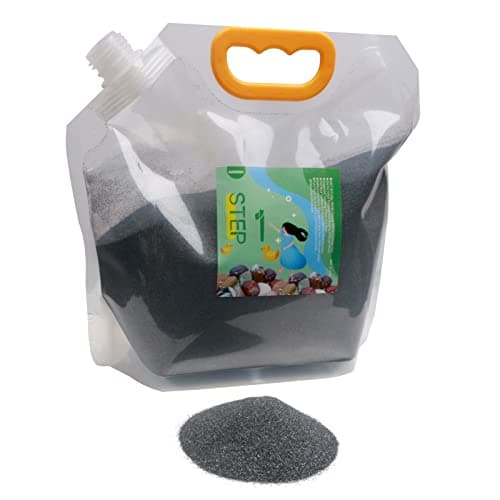 See price on AmazonAmazon
GANGOU coarse grit 60/90, 5 lb in resealable bags
From Best coarse rock tumbler grit: 60/90 silicon carbide for step 1
 See price on AmazonAmazon
Polly Plastics 4-step grit and polish kit, 3 lb
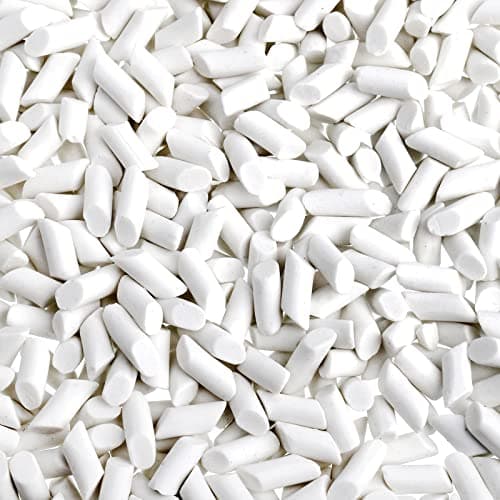 See price on AmazonAmazon
Hiceeden ceramic media, 1/5 x 2/5 in cylinders, 8 lb
From Best ceramic media for rock tumbling: sizes and how much to buy