Chart
Best rocks for tumbling: hardness chart and rocks to avoid
Published
Short answer
The best rocks for tumbling are hard, dense and fine-grained, around Mohs 7: agate, jasper, chalcedony, quartz, aventurine, tiger's eye and petrified wood. Rocks between about Mohs 6 and 8 polish most reliably. Softer stones such as fluorite and calcite need their own load, and grainy, porous or cracked rocks should be skipped.
A rock tumbler treats every stone in the barrel the same way, so the load has to be matched before it goes in. Hardness decides how fast a stone wears and which stones can run together. Texture decides whether it can shine at all: a rock that sheds grains or has open pores stays dull no matter how long it runs. The chart below sorts common rough and found rocks into four load groups. Stones in the same group can share a barrel. Stones from different groups cannot, because the hard ones grind the soft ones away.
Rock tumbling hardness chart: 20 common rocks
Mohs hardness runs from 1 (talc) to 10 (diamond) and measures how well a mineral resists scratching. Read the load group column as the barrel rule: group A stones run with group A, B with B, and so on. Every verdict assumes a rotary tumbler, the standard four grit steps and sound pieces without cracks.
| Rock | Mohs hardness | Verdict | Load group | Handling |
|---|---|---|---|---|
| Agate, chalcedony | About 7 | Tumbles well | A | Standard four steps. Pitted pieces need repeat coarse runs. |
| Jasper | 7 | Tumbles well | A | Standard four steps. A forgiving first rock. |
| Quartz (clear, milky, rose, amethyst) | 7 | Tumbles well | A | Brittle edges. Add ceramic media to stop chips and bruises. |
| Aventurine | 7 | Tumbles well | A | Standard four steps. |
| Tiger's eye | 7 | Tumbles well | A | Standard four steps. |
| Petrified wood | About 7 | Tumbles well | A | Skip pieces with open, porous grain. |
| Quartzite | About 7 | Needs care | A | Only dense pieces polish. Grainy, sugary pieces stay dull. |
| Unakite | 6 to 7 | Needs care | B | Mixed minerals can wear unevenly. Cushion in the later steps. |
| Moonstone, labradorite, amazonite (feldspars) | 6 to 6.5 | Needs care | B | Can split along flat planes. Keep the barrel full and cushioned. |
| Granite | 6 to 7 | Needs care | B | Mixed minerals wear unevenly. Coarse-grained pieces end pitted and dull. |
| Sodalite | 5.5 to 6 | Needs care | C | Wears faster than quartz. Check often and cushion the load. |
| Obsidian | About 5 to 5.5 | Needs care | C | Brittle. Fuller barrel, plenty of cushioning, check more often. |
| Glass | About 5.5 | Needs care | C | Handle like obsidian. Open the barrel carefully: glass loads can build gas. |
| Fluorite | 4 | Needs care | D | Soft load only, gentle schedule. Many hobbyists skip coarse grit. |
| Malachite | 3.5 to 4 | Needs care | D | Soft load only, gentle schedule. |
| Calcite, marble | 3 | Needs care | D | Soft load only. Wears fast, so check often. |
| Petoskey stone | About 3 | Not suitable | Alone | Too soft for the four-step tumble. Usually sanded and polished by hand. |
| Sandstone | Varies, grainy | Not suitable | None | Sheds sand grains that scratch the whole load. |
| Shale, slate, mudstone | Soft, layered | Not suitable | None | Splits into flakes and turns the slurry to mud. |
| Pumice, scoria, other porous rock | Varies | Not suitable | None | Pores carry coarse grit into the polish step. |
Which rocks can share a barrel?
Stones share a load when they wear at the same rate. Group A is the Mohs 7 quartz family: agate, jasper, chalcedony, quartz, aventurine, tiger's eye, petrified wood and dense quartzite. Any of these can be mixed freely, which is why most bagged rough comes from this group. Group B is the feldspar range at about 6 to 6.5. Group C is the brittle range at about 5 to 6: obsidian, glass and sodalite. Group D is the soft range at 3 to 4.
Never mix hard and soft stones in one load. Put obsidian in with agate and the obsidian is worn down to a fraction of its size by the time the agate is shaped. Kit and bagged mixes that combine group A and group B stones can run as one load, but expect the softer stones to finish smaller. Ceramic media is safe filler for every group. Count it as rock when you measure grit with the grit calculator.
Why do rocks around Mohs 7 polish best?
Tumbling grit is silicon carbide, about Mohs 9 to 9.5, so it cuts quartz-hardness rock steadily without eating it away. Rocks between about Mohs 6 and 8 sit in the useful window. Softer stones grind down quickly and scratch easily, so a shine is hard to hold. Stones harder than about 8 cut so slowly that a hobby tumbler struggles to shape them.
Hardness is only half of it. A rock also has to be dense and fine-grained. Agate and jasper are made of quartz crystals too small to see, packed with no gaps, so the surface gets smoother at every step. A grainy rock of the same hardness keeps losing grains and never gets past a matte finish.
What rocks should you not tumble?
Skip any rock that fails on texture, whatever its hardness, and any stone that does not match the rest of the load. These are the usual ones to leave out of the barrel.
- Grainy rocks such as sandstone and coarse granite. Loose grains break free and scratch every other stone in the load.
- Layered rocks such as shale, slate and mudstone. They split into flakes and turn the slurry into thick mud.
- Porous rocks such as pumice, scoria and weathered, chalky stones. Pores trap coarse grit and release it in the polish step.
- Cracked pieces of any rock type. They break apart in the barrel and the sharp fragments gouge the rest of the load.
- Soft stones in a hard load. Fluorite, calcite and malachite need their own gentle run, and Petoskey stones are usually polished by hand.
Note.One bad rock can spoil a batch. A single grainy or porous stone feeds loose grit into the polish step, so leaving a doubtful rock out always costs less than leaving it in.
How to tell if a rock is good for tumbling: two quick tests
Found rocks do not come with a label, so test them before they go in the barrel. Two checks sort most of a pile in a few minutes.
Look at each stone wet as well. Water shows roughly the color a polish would bring out, and it makes cracks, pits and pores easier to see. Sorting beach, river and yard finds is covered in how to find rocks to tumble.
- Scratch test. Drag the point of a steel nail or knife blade across the rock. Steel is about Mohs 5.5 to 6.5. A groove means the rock is softer than group A. A gray metal streak that wipes off means the rock is harder than the steel.
- Rub test. Rub two pieces of the same rock together with some force. If sand-like grains come loose, the rock is too grainy to polish.
How handling changes by load group
The four grit steps stay the same for every group. What changes is how long the coarse step runs and how much cushioning the load needs. Stone-by-stone recipes are on the pages for agates, quartz and obsidian.
| Load group | Coarse grit (step 1) | Fill and cushioning |
|---|---|---|
| A: Mohs 7 | 7 days per run. Hard, jagged rough often needs 2 to 4 runs. | Barrel about 2/3 full. Ceramic media for quartz and as filler. |
| B: Mohs 6 to 6.5 | 7-day runs, inspected after each one. Stop as soon as the stones are shaped. | Barrel about 2/3 full, with ceramic media as cushioning. |
| C: Mohs 5 to 6 | Wears faster than quartz. Check more often and stop when shaped. | Fuller barrel, toward 3/4, with plenty of cushioning media. |
| D: Mohs 3 to 4 | Often skipped. Many hobbyists start soft stones at a finer grit. | Own load, plenty of cushioning, short runs. |
Quick answers
Short answers to the most common questions about choosing rocks for a tumbler. The chart at the top of the page has the full detail.
- Can any rock be tumbled? No. Any rock wears down in a barrel, but only hard, dense, fine-grained rocks take a polish. Grainy, porous, layered or cracked rocks stay dull or fall apart.
- What are good rocks to tumble for a first batch? Jasper and agate. Both are about Mohs 7, forgiving, and able to share a load with each other and with quartz.
- What rocks should you not tumble? Sandstone, shale, slate, pumice and any cracked or crumbly stone. Soft stones such as calcite and fluorite also stay out of a hard-rock load.
- How do you tell if a rock is good for tumbling? A steel nail should not scratch it, two pieces rubbed together should shed no grains, and the wet surface should show no cracks or pores.
- Can hard and soft rocks go in the same barrel? No. The hard stones grind the soft ones away. Keep each load inside one group from the chart.
Use this chart
Print it, save the image version, or put it on your own site or forum post with the code below. The code keeps a link back to this page as the source.
Embed code
<a href="https://tumblegrit.com/blog/rock-tumbling-hardness-chart"><img src="https://tumblegrit.com/charts/rock-tumbling-hardness-chart/image.png" alt="Best rocks for tumbling: hardness chart and rocks to avoid" width="600" loading="lazy"></a>
<p>Source: <a href="https://tumblegrit.com/blog/rock-tumbling-hardness-chart">Best rocks for tumbling: hardness chart and rocks to avoid</a>, Tumble Grit</p>
What you need for this
 See price on AmazonAmazon
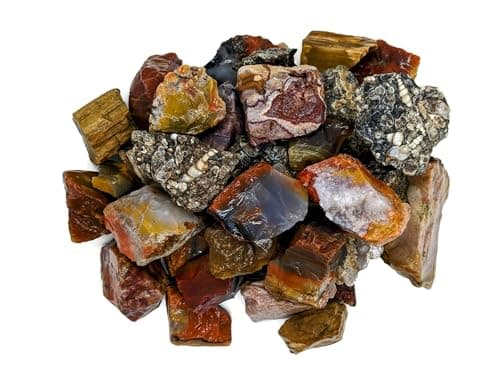
Mooseman Minerals agate and jasper rough mix, 3 lb
From Best rough rocks for tumbling: mixes and single-stone bags
 See price on AmazonAmazon
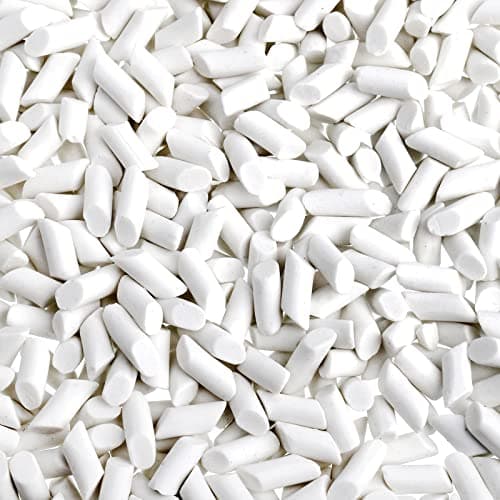
Hiceeden ceramic media, 1/5 x 2/5 in cylinders, 8 lb
From Best ceramic media for rock tumbling: sizes and how much to buy
 See price on AmazonAmazon
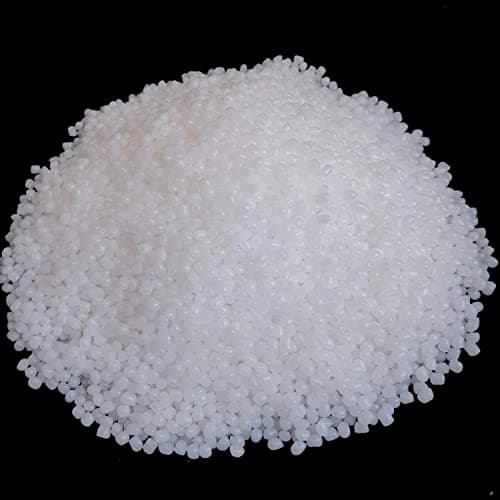
Tonmp plastic pellets tumbling media, 3 lb
From Best plastic pellets for rock tumbling and when to use them
 See price on AmazonAmazon
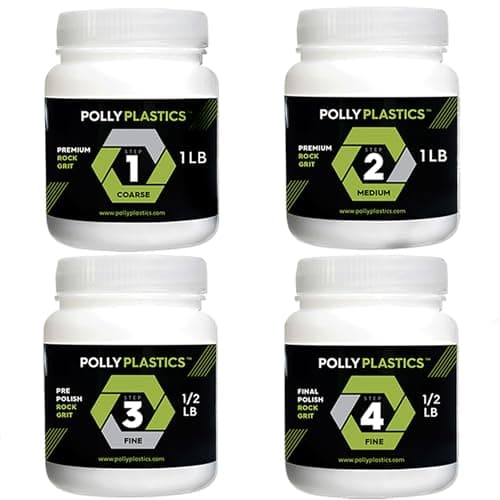
Polly Plastics 4-step grit and polish kit, 3 lb