How-to
Rock tumbling obsidian: cushioning, grit and timing
Published
Short answer
Yes, you can rock tumble obsidian, but not on the standard recipe. It is volcanic glass, about Mohs 5 to 5.5 and brittle, so it chips and bruises when pieces hit each other. Fill the barrel 2/3 to 3/4 full, make 30 to 50 percent of the load ceramic media, skip or shorten coarse grit, and run medium and fine grit for 4 to 7 days each before about 7 days of polish.
The standard four-step schedule is built for agate and jasper, which are hard and tough. Obsidian is neither. It is softer than quartz and it has no crystal structure to stop a crack, so every hard knock in the barrel leaves a chip or a white bruise mark. The result depends less on grit grade than on how the load moves: a full barrel, plenty of small media between the pieces, and shorter runs with more checks. This page gives the adjusted schedule as ranges for a rotary tumbler, covers Apache tears and broken black obsidian, and explains what the white marks are and how to get rid of them.
Why does the standard recipe fail on obsidian?
Obsidian is natural glass. It forms when lava cools too fast to grow crystals, and it sits at about Mohs 5 to 5.5, well under agate and jasper at around 7. Softness alone is not the problem. Glass is brittle and breaks with a curved, shell-like fracture, so an impact that would do nothing to a jasper pebble pops a flake off an obsidian edge or leaves a small crack under the surface.
The standard recipe makes that worse in three ways. Repeated 7 day runs in coarse grit (step 1, 60/90) remove a soft stone fast and keep exposing fresh sharp edges. A barrel loaded with rock alone lets the pieces fall straight onto each other. And a mixed load with harder rock grinds the obsidian away, which is why the hardness chart keeps it in its own batch.
Obsidian tumbling schedule for a rotary tumbler
Apache tears and other already rounded pieces start at medium grit: there is nothing for coarse grit to shape, and it only adds chips. Jagged broken obsidian gets one coarse run at most, opened every 2 to 3 days and stopped as soon as the edges are round. Grit stays at about 2 level tablespoons per pound in every step, with media counted as rock. The grit calculator gives the amount for your barrel size.
| Step | Grit | Run time | Check | Stop when |
|---|---|---|---|---|
| Coarse (step 1) | 60/90 silicon carbide, jagged rough only | 0 to 7 days, one run | Every 2 to 3 days | Sharp edges and broken faces are rounded |
| Medium (step 2) | 150/220 silicon carbide | 4 to 7 days | Around day 3 or 4 | Evenly matte, no chips or coarse scratches |
| Fine (step 3) | 500 or 600 silicon carbide | 4 to 7 days | Around day 3 or 4 | Dry pieces look satin, no white marks |
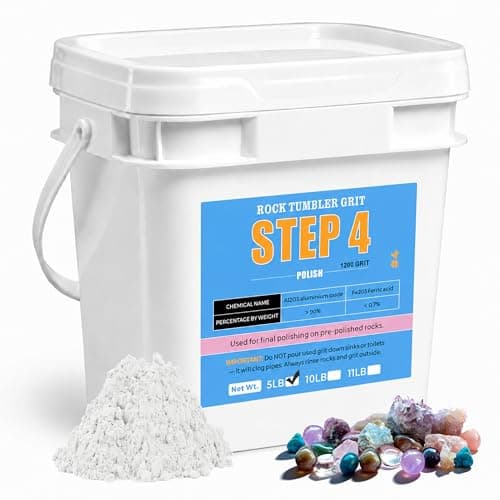
| Polish (step 4) | Aluminum oxide polish; cerium oxide is also used | About 7 days | Day 3 and day 5 | Dry pieces shine |
| Burnish (optional) | Grated bar soap or borax, no grit | About 1 hour | At the end | Rinse water runs clear |
How full should the barrel be, and how much media?
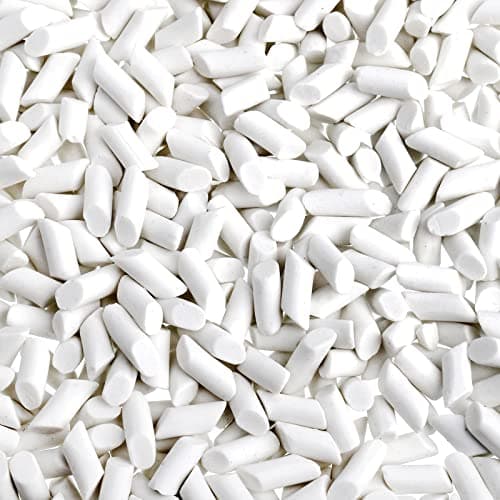
Cushioning does most of the work. Fill the barrel 2/3 to 3/4 full, toward the top of the normal range, so the pieces roll over each other and do not drop across open space. Make 30 to 50 percent of that load small ceramic media by volume. The media sits between the pieces of glass, keeps them from hammering each other and carries grit across the curved faces.
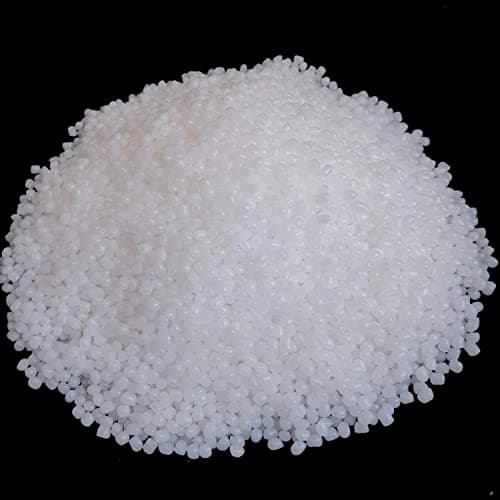
For the polish step many hobbyists switch to plastic pellets, which are lighter and softer than ceramic. Grit embeds in pellets, so a batch used in polish stays in polish. Ceramic media vs plastic pellets covers which to use where. Add water to just below the top layer of the load, the same as for any other batch.
Note.Keep piece sizes close. One fist-size chunk in a load of small pieces acts like a hammer. Break large pieces down or run them in a separate batch.
How to rock tumble obsidian step by step
The steps below assume a rotary tumbler and loose grit. Clean the stones, media, barrel, lid and lid seal completely between steps: one grain of coarser grit scratches glass even more easily than it scratches agate.
- 1
Sort the rough. Remove pieces with deep cracks and set aside anything much larger than the rest. If you have to break pieces down, wear eye and hand protection: fresh obsidian flakes are as sharp as broken glass.
- 2
Load the barrel 2/3 to 3/4 full, with 30 to 50 percent of the volume as ceramic media. Add about 2 level tablespoons of grit per pound of rock and media, then water to just below the top layer.
- 3
Jagged rough only: run coarse grit for up to 7 days, opening the barrel every 2 to 3 days. Stop when the edges are rounded. Rounded pieces and Apache tears skip this step.
- 4
Run medium grit (150/220) for 4 to 7 days. Look inside around day 3 or 4 and stop when every piece is evenly matte with no chips.
- 5
Run fine grit (500 or 600) for 4 to 7 days. Dry a few pieces and look for white marks under a strong light before moving on.
- 6
Run polish for about 7 days with plastic pellets or clean media kept for polish only. Check at day 3 and day 5 and stop when dry pieces shine.
- 7
Optional: burnish for about 1 hour with roughly half a tablespoon of grated bar soap or borax per pound, then rinse until the water runs clear.
Note.Obsidian and glass can build gas pressure in a sealed barrel. Open it carefully, pointed away from you, at every check.
What are the white bruise marks on tumbled obsidian?
The white or gray spots and small crescent shapes on black obsidian are bruises: tiny fractures just under the surface where one piece struck another. Light scatters inside the crack, so it shows as white against the dark glass. A bruise is damage inside the stone, not a film on top, so polish cannot remove it and more polish time usually adds more.
To fix a bruised batch, go back to fine grit for a full run, or to medium grit if the marks are deep, then polish again with more cushioning. To avoid bruises in the first place, check the four usual causes.
- Barrel under 2/3 full, so the pieces fall and slam when they should roll.
- Too little media. Raise it toward 50 percent of the load by volume.
- Large heavy pieces tumbling with small ones, or harder rock mixed into the load.
- Rough handling between steps. Pour the load into a plastic colander or a bucket of water, not onto a hard surface.
How to tell when obsidian is done
Judge every step on dry stones. Wet obsidian always looks glossy, so rinse a few pieces, dry them and hold them under a single bright light. After medium grit the surface should be evenly matte with no chips. After fine grit it should look satin, feel silky and show no white marks. After polish, a dry piece should reflect the light as a clear, sharp spot.
If the shine is patchy or dull after a full polish run, the cause is almost always upstream: a fine step cut short, grit carried over, or bruising. Why your tumbled rocks are not shiny lists each cause with its fix. Write down the days, grit and media used in each step so the next batch starts from what worked.
Is a vibratory tumbler better for obsidian?
A vibratory tumbler is gentler on brittle material because the load shivers in place and does not fall. It does not shape rough, so jagged obsidian still needs its short coarse run in a rotary barrel first. After that, medium, fine and polish take about 2 to 3 days each in a vibratory bowl, checked daily. Grit and water amounts are much smaller than in a rotary barrel and differ by maker, so the bowl maker's chart is the final word.
Quick answers
Short answers to the most common obsidian questions. All times are ranges for a rotary tumbler, and a look inside the barrel beats any fixed schedule.
- Can you rock tumble obsidian? Yes. It takes a glassy polish, but it needs its own load, a barrel 2/3 to 3/4 full and 30 to 50 percent cushioning media.
- How long does tumbling obsidian take? About 2 to 3 weeks for rounded pieces and Apache tears, plus up to a week when jagged rough needs a coarse run.
- Can obsidian go in the same barrel as agate or jasper? No. Those are around Mohs 7 and obsidian is 5 to 5.5, so the harder stones chip it and grind it away.
- Which polish works on obsidian? Aluminum oxide polish is the common choice. Cerium oxide, a traditional glass polish, is also used.
What you need for this
 See price on AmazonAmazon
Hiceeden ceramic media, 1/5 x 2/5 in cylinders, 8 lb
From Best ceramic media for rock tumbling: sizes and how much to buy
 See price on AmazonAmazon
Tonmp plastic pellets tumbling media, 3 lb
From Best plastic pellets for rock tumbling and when to use them
 See price on AmazonAmazon
KomeStone 1200 aluminum oxide polish, step 4, 5 lb
 See price on AmazonAmazon
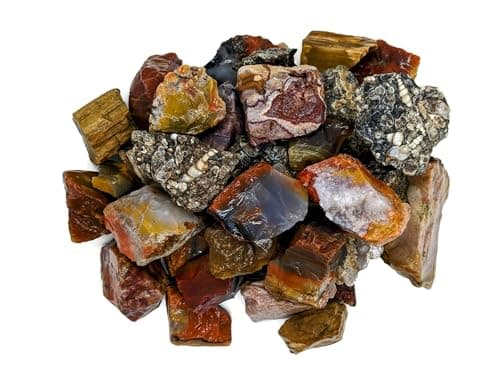
Mooseman Minerals agate and jasper rough mix, 3 lb
From Best rough rocks for tumbling: mixes and single-stone bags