How-to
How to find rocks to tumble: where to look and what to pick up
Published
Short answer
Look where water has already sorted hard rock: beaches, river gravel bars and landscape gravel. Keep stones that a steel nail cannot scratch, that shed no grains when rubbed together and that have no cracks or pores. Those are usually quartz, agate, jasper or chert at about Mohs 7, and they polish. Rock shops and bagged rough fill the gap when the local rock is soft.
Free rough is everywhere, but most random rocks do not polish. The ones that do are hard, dense and fine-grained, and they make up a small share of any beach or gravel bar. A few minutes of sorting on the spot saves weeks of running a barrel of rock that ends dull. This page covers where to look, what to check before a stone goes in the bucket, what beach and river rocks usually turn out to be, and how much to bring home for one load. It also covers the rule that comes first: make sure you are allowed to collect where you are standing.
Where to find rocks for tumbling
Good tumbling rough collects wherever moving water has broken up and sorted hard rock, and it is also sold sorted by type. These are the standard places to look, with what each one usually gives you.
| Place | What you usually find | Watch for |
|---|---|---|
| Ocean and lake beaches | Rounded quartz, quartzite, chert, jasper and basalt, sometimes agate | Rounded stones still need coarse grit. Many beaches do not allow collecting. |
| River and creek gravel bars | A mix carried from upstream: quartz, quartzite, jasper, granite, sandstone | Plenty of grainy and soft rock to sort out on the spot. |
| Your yard and landscape gravel | River gravel or crushed stone, whatever the supplier quarried | Crushed limestone is common and too soft for a hard-rock load. |
| Rock shops, gem shows and rock clubs | Rough sold by type and weight, plus local advice on where to collect | Ask for tumbling-grade rough without cracks. |
| Bagged rough bought online | Single-stone bags or mixes of known hardness | A mix should stay inside one hardness group. |
How to check a rock before you take it home
Carry a steel nail and a bottle of water. Each stone takes well under a minute, and the same checks work on a beach, a gravel bar or a pile of yard rock.
- 1
Wet the stone. A wet rock shows roughly the color and pattern a polish would bring out, and water makes cracks and pores easier to see.
- 2
Scratch it with a steel nail or knife blade, about Mohs 5.5 to 6.5. A groove means the rock is too soft for a hard-rock load. A gray metal streak that rubs off means the rock is harder than the steel. Keep it.
- 3
Rub two pieces of the same rock together with some force for a few seconds. If sand-like grains come loose, the rock is grainy and will not polish. Leave it.
- 4
Look for cracks and pits. Drag a fingernail across the surface: a crack that catches the nail can split in the barrel, and open pores carry grit from one step to the next.
- 5
Sort by size. For a 3 lb barrel, pick stones from about 1/4 inch to 1 1/2 inches across, with more small than large, so the load rolls instead of sliding.
- 6
Collect more than you need. A 3 lb barrel takes about 2 lb of rock, and a good share of every bucket gets rejected at home, so bring back about twice that.
Can you tumble beach rocks and river rocks?
Yes, if they pass the tests above. Beach and river stones are whatever the local bedrock and gravel supply, so the mix changes from place to place. The keepers are usually quartz, quartzite, chert, jasper and agate at about Mohs 7. Sandstone, limestone, shale and coarse granite are just as common and are the ones to leave behind.
A rounded stone is not a finished stone. Water-worn rocks carry a weathered outer skin and tiny bruises from years of knocking together, and both have to be ground off before the stone can shine. Expect beach and river finds to need as much time in coarse grit (step 1, 60/90) as broken rough: 7 days per run, repeated until the surface is clean. Full timing is in how long to tumble rocks.
Can you tumble random rocks from the yard?
You can tumble them, but a random handful rarely polishes as one load. The usual problem is mixed hardness: the hard stones grind the soft ones away, and the soft ones shed mud and grains that dull everything else. Test each rock, then sort the keepers into load groups with the rock tumbling hardness chart. Run one group at a time. Crushed landscape stone is sharp and angular, so plan on 2 to 4 coarse runs before it is rounded.
Check land access and collecting rules first
Every beach, riverbank and field belongs to someone. On private land, ask the owner before you pick anything up. On public land, the rules depend on who manages the site, and they differ from one place to the next. Many parks and protected areas do not allow removing rocks at all. Other places allow small amounts for personal use and set a limit on how much you can take.
Look up the landowner or managing agency before the trip and read its rules on collecting. A posted sign at the access point or a call to the local office settles most questions. Rock clubs are a good shortcut, because they know which local sites are open to collectors.
Note.If you cannot find out who manages a site or what its collecting rule is, do not collect there. Take photos, and buy rough instead.
When buying rough makes more sense
Some areas simply have the wrong rock. If the local gravel is mostly limestone, sandstone or shale, nothing on the ground will take a polish. Bought rough solves that: a bag of a single stone type has one known hardness, so the whole load wears at the same rate. Rock shops let you inspect pieces for cracks before you pay. For a first batch, jasper or agate rough is the safe choice. The best rough rocks for tumbling guide lists single-stone bags and mixes. Found rocks can join a bought load only when they pass the same tests and match its hardness group.
How to tell your rocks are ready for the barrel
The collecting job is done when you have one sorted load, not just a full bucket. Check the pile against this list before you add grit.
Once the load passes, it runs like any other: about 2 level tablespoons of coarse grit per pound of rock and water to just below the top layer. The grit calculator gives the amount for your barrel size.
- Every stone resisted the steel nail and shed no grains in the rub test.
- All stones belong to one hardness group. Nothing soft is riding along with Mohs 7 rock.
- No stone has a crack that catches a fingernail, an open pore or a crumbly skin.
- Sizes are mixed from about 1/4 inch to 1 1/2 inches for a 3 lb barrel, with plenty of small pieces.
- The washed stones fill the barrel between 1/2 and 3/4 full, about 2/3. If you are short, ceramic media makes up the difference.
Quick answers
Short answers on finding free rough and on what beach, river and yard rocks do in a tumbler. The steps above cover the tests in full.
- Where can you find rocks for tumbling? Beaches, river gravel bars and landscape gravel for free rough. Rock shops, gem shows and bagged rough for sorted stone of known hardness.
- Do tumbled beach rocks need coarse grit? Yes. Beach stones are rounded but have a weathered, bruised skin. They need step 1 like any other rough, in 7-day runs until the surface is clean.
- Can you tumble river rocks? Yes, the hard, fine-grained ones. Keep quartz, jasper, chert and agate. Leave sandstone, shale and anything a steel nail scratches.
- Can you tumble random rocks? Only after sorting. A mixed-hardness load ends with the soft stones ground away and the hard stones left dull.
- Where can I get rocks for tumbling near me? Try a local rock shop or a rock and mineral club. Clubs know which nearby sites are open to collectors.
What you need for this
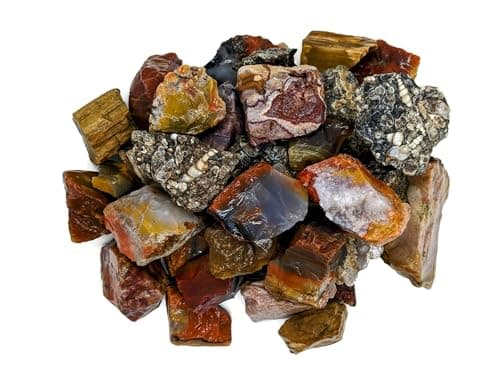 See price on AmazonAmazon
Mooseman Minerals agate and jasper rough mix, 3 lb
From Best rough rocks for tumbling: mixes and single-stone bags
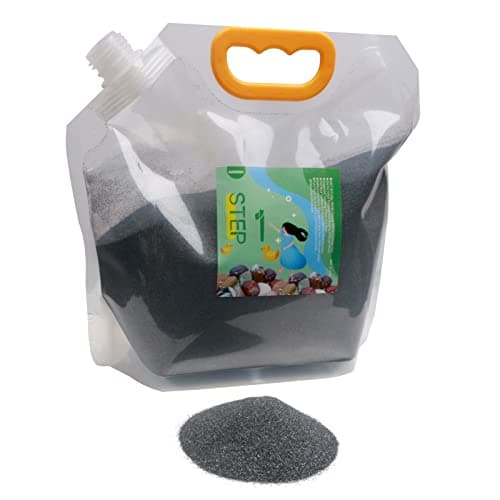 See price on AmazonAmazon
GANGOU coarse grit 60/90, 5 lb in resealable bags
From Best coarse rock tumbler grit: 60/90 silicon carbide for step 1
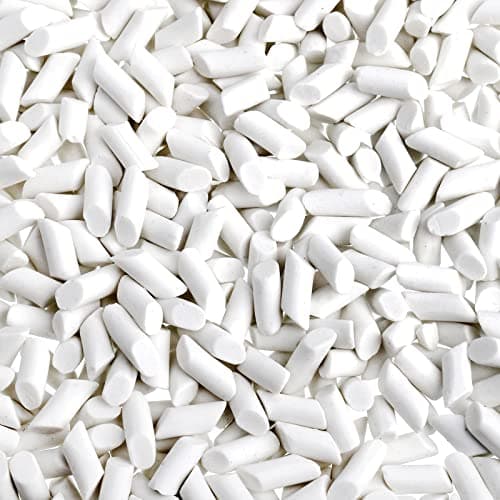 See price on AmazonAmazon
Hiceeden ceramic media, 1/5 x 2/5 in cylinders, 8 lb
From Best ceramic media for rock tumbling: sizes and how much to buy
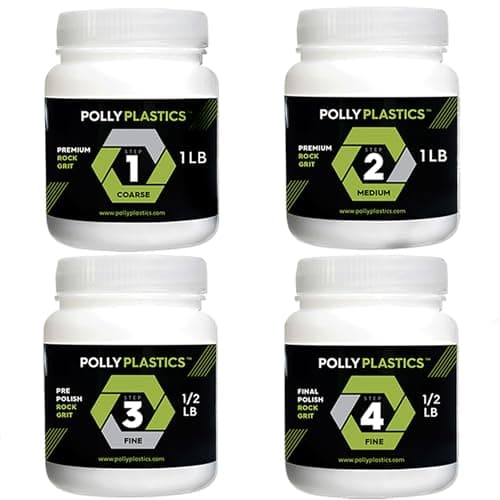 See price on AmazonAmazon
Polly Plastics 4-step grit and polish kit, 3 lb