Chart
Rock tumbler speed chart: RPM by barrel size and stage
Published
Short answer
Hobby rotary rock tumblers turn the barrel at about 20 to 50 rpm. Published speeds run from 35 to 50 rpm for 2 to 3 lb barrels down to 20 to 22 rpm for 12 to 15 lb barrels. On a speed dial, use the fastest setting only for coarse grit on hard rock, and the slowest for polish and fragile stones. At about 90 rpm and above, polished glass comes out bruised or fractured.
Speed matters because a rotary tumbler grinds by sliding, not by dropping. At the right speed the load climbs the rising wall and the top layer slides back down in a steady landslide. The right rpm depends on the inside diameter of the barrel: a wide barrel must turn slower than a narrow one. This chart is for owners of tumblers with a speed dial, and for anyone checking whether a machine runs too fast. All figures are ranges from published sources or simple calculation, not test results.
Rock tumbler rpm chart by barrel diameter
Measure across the inside of the barrel, wall to wall, and find the row. Stay between the slow end and the fast end. The last column is the speed at which the load pins to the wall and stops tumbling.
| Inside diameter | Slow end: polish, fragile stones | Fast end: coarse grit, hard rock | Spin-out speed |
|---|---|---|---|
| 3 in | about 31 rpm | about 61 rpm | 153 rpm |
| 4 in | about 27 rpm | about 53 rpm | 133 rpm |
| 5 in | about 24 rpm | about 47 rpm | 119 rpm |
| 6 in | about 22 rpm | about 43 rpm | 108 rpm |
| 7 in | about 20 rpm | about 40 rpm | 100 rpm |
| 8 in | about 19 rpm | about 38 rpm | 94 rpm |
| 10 in | about 17 rpm | about 34 rpm | 84 rpm |
Rock tumbler rpm by model: published barrel speeds
These are the barrel speeds that could be checked against a published page or manual. They are barrel revolutions per minute, not motor rpm. A listing that says 1550 or 3400 rpm is quoting the motor, which the pulleys gear down.
Models with no published barrel speed that could be verified are left out, including Lortone machines and National Geographic kit tumblers. For those, measure the speed with the tape method below. Highland Park also warns that running the RT3L at maximum speed can damage its bushings.
| Tumbler | Barrel | Published barrel speed | Source |
|---|---|---|---|
| Thumler's MP-1 | One 2 lb rubber barrel | 50 rpm | RockTumbler.com |
| Thumler's A-R1 | One 3 lb rubber barrel, about 4 in inside | 40 rpm | RockTumbler.com |
| Thumler's A-R2 | Two 3 lb rubber barrels | 35 rpm | RockTumbler.com |
| Thumler's A-R12 | One 12 lb rubber barrel | 22 rpm | RockTumbler.com |
| Thumler's Model B | 15 lb barrel, liner about 7 in inside | 20 rpm | RockTumbler.com |
| Highland Park RT3L | Two 3 lb or three 1.5 lb barrels, variable speed | Start at 50 rpm. Motor can exceed 70 rpm. | Highland Park manual |
Why barrel diameter matters for speed
One turn of the barrel moves the wall a distance of 3.14 times the diameter. So at the same rpm, the wall of a 7 inch barrel travels 1.75 times as fast as the wall of a 4 inch barrel, and it lifts the rocks higher before they slide. A faster wall, a higher lift and a longer drop all mean harder hits. To get the same gentle slide, the wide barrel has to turn slower.
The published speeds show it. The Thumler's A-R1 barrel is about 4 inches across and turns at 40 rpm, so its wall moves about 500 inches per minute. The Model B liner is about 7 inches across and turns at 20 rpm, about 440 inches per minute. Half the rpm, nearly the same wall speed.
Go fast enough and the rocks stop falling at all. At the spin-out speed the outward force equals gravity, and the load rides around pinned to the wall. Ore mills run at well over half of that speed because they are built to smash. Rock tumblers run at about 20 to 40 percent of it, because the aim is to slide and grind, not to break.
What speed should I put my rock tumbler on?
A dial marked 1 to 3 does not tell you rpm, so treat the settings as slow, medium and fast. The rule is simple: speed goes down as the grit gets finer. Highland Park's manual says to reduce the speed with each polishing step, and to set it so you hear a steady rolling grind with no banging.
Packet kits such as National Geographic print their own setting for each step. Follow the manual for those, and see the National Geographic tumbler instructions page. Grit and times for each step are in the grit chart.
| Stage | Setting on a 3-speed dial | Why |
|---|---|---|
| Step 1, coarse grit, hard rock (Mohs 7) | Fast, or medium if you hear banging | Hard rock stands the harder action |
| Step 2, medium grit | Medium | Scratch removal needs no impact |
| Step 3, fine or pre-polish | Medium or slow | Bruises here show as dull spots after polish |
| Step 4, polish | Slow | Chips and bruises at this stage cannot be polished out |
| Burnish | Slow | The gentlest roll is enough |
| Any step, fragile or soft stones | Slow | They chip at speeds hard rock tolerates |
What too fast and too slow look like in the barrel
You cannot see into a closed barrel, so judge the speed by sound while it runs and by the stones when you open it. These are the signs for each case.
- Right speed: a steady, even rolling grind. The load climbs partway up the rising wall and the top layer slides back down.
- Too fast: sharp clacks and bangs as stones are thrown across the barrel. On opening you find chips, white bruise marks and fresh fractures.
- Far too fast: the banging stops because the load is pinned to the wall. Almost no grinding happens.
- Too slow: a soft sloshing sound. The load slumps at the bottom and slides as one mass, so shaping takes much longer.
Note.An under-filled barrel bangs just like a barrel that is too fast. Bring the load up to about 2/3 full before you blame the speed.
How to measure your rock tumbler's rpm
Any tumbler can be checked with a strip of tape and a phone timer. This is the manual method described in the Highland Park manual. Measure with the barrel loaded, because a heavy load and a worn belt both slow the barrel down.
- 1
Stick a 1 inch strip of bright tape on the outside of the barrel where you can see it pass.
- 2
Start the tumbler, let it run for 1 minute to settle, then count how many times the tape comes round in 60 seconds.
- 3
Compare the count with the chart row for your barrel's inside diameter. Anywhere between the slow end and the fast end is fine.
- 4
On a dial tumbler, repeat for each setting and write the 3 numbers on the machine or in your log book.
Fragile stones that need the slow setting
Speed is hardest on brittle and soft material. Use the slowest setting in every step for the stones below, fill the barrel to about 3/4 and add cushioning. Ceramic media or plastic pellets shorten the distance each stone can fall.
- Obsidian (Mohs 5 to 5.5) and glass (about 5.5): brittle, and they chip on any hard knock. See tumbling obsidian.
- Quartz crystals and quartz with internal cracks: hard, but prone to chipped edges. See tumbling quartz.
- Feldspars such as moonstone, labradorite and amazonite (Mohs 6 to 6.5).
- Soft stones: fluorite (4), malachite (3.5 to 4), calcite and Petoskey stone (3). Tumble them alone, never with hard rock.
Note.RockTumbler.com notes that many toy and beginner tumblers turn so fast that polished glass is damaged even on the slowest setting. If yours measures near 90 rpm, use a fuller barrel and extra cushioning.
Rock tumbler variable speed: is it worth having?
Most hobby rotary tumblers, including Thumler's and Lortone machines, have one speed set by the drive. Variable speed earns its place in two cases: you often tumble fragile or soft material, or the machine's single speed is on the fast side for its barrel. On a fixed-speed machine the only control you have is the load. A fuller barrel, up to 3/4, and more cushioning media give a gentler action at the same rpm.
Quick answers
Short answers on rock tumbler speed. All rpm figures are barrel revolutions per minute, taken from the chart and the published speeds above.
- How many rpm for a rock tumbler? About 20 to 50 rpm for hobby rotary tumblers: 35 to 50 rpm for 2 to 3 lb barrels, 20 to 22 rpm for 12 to 15 lb barrels.
- How fast should a rock tumbler spin? Fast enough that the load slides down in a steady landslide, slow enough that you hear no banging.
- What speed should I put my rock tumbler on? Fast or medium for coarse grit on hard rock, medium for step 2, slow for polish and for any fragile stone.
- Does rock tumbling rpm change with barrel size? Yes. A wider barrel needs fewer rpm for the same action, which is why 15 lb machines turn at about 20 rpm.
Use this chart
Print it, save the image version, or put it on your own site or forum post with the code below. The code keeps a link back to this page as the source.
Embed code
<a href="https://tumblegrit.com/blog/rock-tumbler-speed-chart"><img src="https://tumblegrit.com/charts/rock-tumbler-speed-chart/image.png" alt="Rock tumbler speed chart: RPM by barrel size and stage" width="600" loading="lazy"></a>
<p>Source: <a href="https://tumblegrit.com/blog/rock-tumbler-speed-chart">Rock tumbler speed chart: RPM by barrel size and stage</a>, Tumble Grit</p>
What you need for this
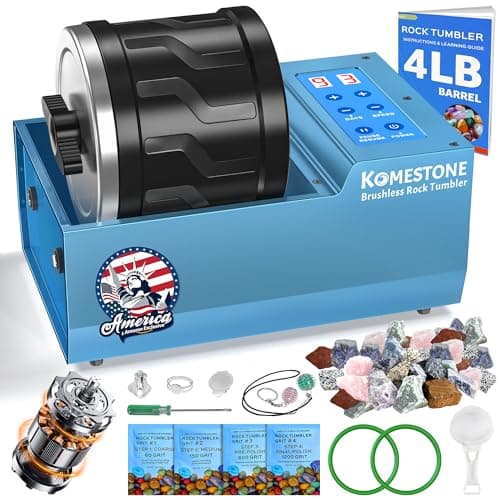 See price on AmazonAmazon
KomeStone G1 rock tumbler kit, 4 lb rubber barrel
From Best rock tumblers for adults: hobby-grade rotary machines
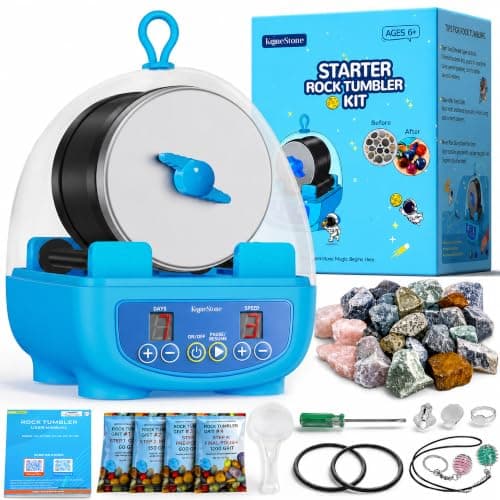 See price on AmazonAmazon
KomeStone K5 kids rock tumbler kit, ages 6+
From Best rock tumblers for kids: kits by age and barrel size
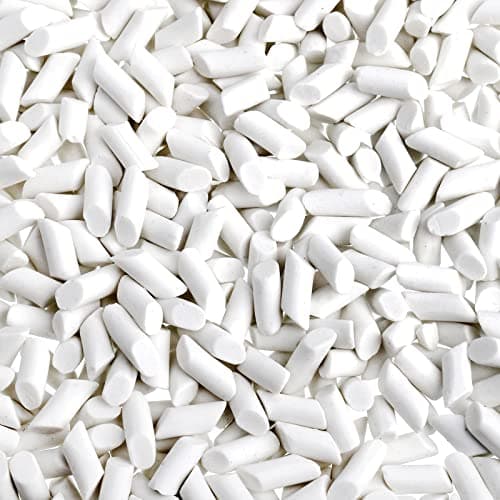 See price on AmazonAmazon
Hiceeden ceramic media, 1/5 x 2/5 in cylinders, 8 lb
From Best ceramic media for rock tumbling: sizes and how much to buy
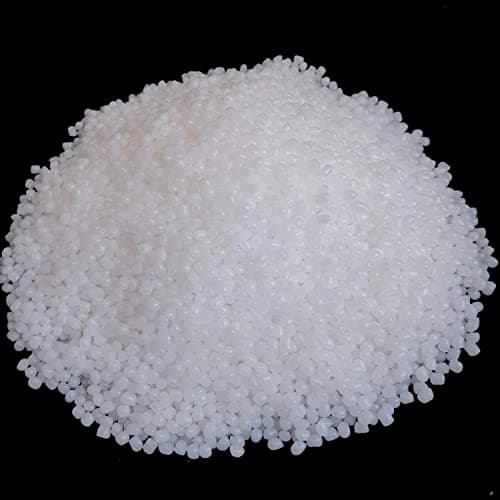 See price on AmazonAmazon
Tonmp plastic pellets tumbling media, 3 lb
From Best plastic pellets for rock tumbling and when to use them