How-to
Rock tumbling quartz: grit schedule and how to avoid chipped edges
Published
Short answer
Yes, quartz can go in a rock tumbler. It is Mohs 7 and polishes on the standard four steps with about 2 level tablespoons of grit per pound. The catch is that quartz is brittle: pieces knocking together leave chipped, frosted edges. Keep the barrel about 2/3 full and add ceramic media, about 30 percent of the load in coarse grit and 40 to 50 percent in the later steps.
White and clear quartz are among the most common finds on beaches, in river gravel and in yards, so they are often the first stones to go into a new tumbler. Quartz is hard enough to take a glassy polish. What decides the result is impact, not grit: quartz is brittle, and every hard knock in the barrel leaves a small bruise that no polish hides. Cracked pieces are the other risk. This page gives the schedule for a rotary tumbler, the cushioning that prevents chips, and what changes for quartzite.
Can you put quartz in a rock tumbler?
Yes. Clear rock crystal, milky white quartz, rose quartz, amethyst and smoky quartz are all the same mineral at Mohs 7, and all of them can take a glassy polish. Quartz sits in the same load group as agate and jasper, so it can share a barrel with them. The rock tumbling hardness chart shows the full group.
Two conditions apply. The pieces must be sound, because white vein quartz in particular is often full of internal cracks and breaks up in the barrel. And the load needs cushioning, because quartz chips where agate would not.
Quartz grit schedule by step
The grits and times are the standard rotary schedule. The difference is the media column. Measure about 2 level tablespoons of grit per pound of load, counting the ceramic media as rock, and add water to just below the top layer. The grit calculator works out the amount for your barrel.
| Step | Grit | Time | Ceramic media | Move on when |
|---|---|---|---|---|
| 1 Coarse | 60/90 silicon carbide | 7 days per run, often 2 to 4 runs | About 30% of the load | Rounded, with no cracks, pits or flat broken faces |
| 2 Medium | 150/220 silicon carbide | About 7 days | 40 to 50% of the load | Smooth and evenly matte, no coarse scratches |
| 3 Fine / pre-polish | 500 or 600 silicon carbide | About 7 days | 40 to 50% of the load | Dry stones look satin and feel silky |
| 4 Polish | Aluminum oxide polish | 7 to 10 days | 40 to 50%, clean media kept for polish | Dry stones shine |
| 5 Burnish (optional) | Grated bar soap or borax, about 1/2 tablespoon per pound | 1 hour to 1 day | Same clean media | Rinse water runs clear |
How to tumble quartz step by step
Run quartz like any hard rock, with two extra habits: cull cracked pieces before you start, and keep media in the barrel from the first day.
- 1
Check each piece against a bright light. Set aside quartz with cracks running through it, or break it along the crack first and tumble the sound pieces. Wear eye and hand protection when breaking rock.
- 2
Load quartz and ceramic media in roughly a 70 to 30 mix until the barrel is about 2/3 full. Add 2 level tablespoons of coarse grit (step 1, 60/90) per pound, then water to just below the top layer.
- 3
Run for 7 days, rinse and inspect. Repeat with fresh coarse grit until every piece is rounded with no chips or pits. Jagged quartz often needs 2 to 4 runs.
- 4
Wash the stones, media, barrel, lid and seal. Raise the media to 40 to 50 percent of the load so the barrel is back at 2/3, then run medium grit (step 2, 150/220) for about 7 days.
- 5
Clean again and run fine grit (step 3, 500 or 600) for about 7 days. Do not move on until the dry stones look satin and feel silky.
- 6
Clean everything with extra care, then polish for 7 to 10 days with media that is only ever used for polish. A short burnish with soap or borax afterward can brighten the result.
Why quartz chips and frosts at the edges
Quartz is hard but brittle. When two pieces collide, the edge does not dent. It takes a tiny curved fracture, a bruise, that scatters light and shows as a white frosted spot. A barrel of quartz knocking on quartz collects these bruises all along the edges, and pieces larger than about one inch suffer most because they hit hardest.
A bruise runs below the surface, so only coarse grit can grind past it. Medium grit, fine grit and polish just shine the stone around the mark. Three things make bruising worse: a barrel under half full, a load of big pieces with nothing small between them, and no media.
How much cushioning to add in later steps
Use ceramic media at about 30 percent of the load in step 1. More than that slows the shaping, because media takes the place of rock grinding on rock. From step 2 on, shaping is over and protection matters more, so raise the media to 40 to 50 percent of the load. Quartz loses volume in coarse grit, and the extra media also brings the barrel back to about 2/3 full.
Small ceramic pieces work best, because they fill the gaps between stones and keep quartz from landing on quartz. Plastic pellets are the lighter option for the polish step. They float, and grit embeds in them, so a batch of pellets stays with one step for good. Ceramic media vs plastic pellets compares the two.
Note.Ceramic media can be rinsed and reused, but many hobbyists keep a separate batch that only ever sees polish. One grain of coarse grit in the polish barrel scratches the whole batch.
Quartz vs quartzite in the barrel
Quartzite is not a kind of quartz crystal. It is a rock made of quartz sand grains fused together by heat and pressure. The hardness is the same, about Mohs 7, so the two can share a load. The texture is what differs.
| Point | Quartz | Quartzite |
|---|---|---|
| What it is | One mineral, as crystals or solid vein material | A rock of fused quartz grains |
| Mohs hardness | 7 | About 7 |
| Polish | Glassy | Dense pieces shine. Grainy pieces stop at satin or stay dull. |
| Main risk | Chipped, frosted edges and internal cracks | Grains pulling out and scratching the load |
| Test before tumbling | Hold to the light and look for cracks | Rub two pieces together. Loose grains mean skip it. |
What goes wrong with quartz and how to fix it
Most quartz problems show up after polish but start earlier. Find the symptom, then go back to the step that caused it. The wider checklist is in why tumbled rocks are not shiny.
| What you see | Likely cause | What to do |
|---|---|---|
| White frosted edges or small curved marks | Impact bruises from quartz hitting quartz | Back to coarse grit to grind past them, then more media and a fuller barrel. |
| A stone broke into sharp pieces | An internal crack opened during the run | Pull the pieces, send them back to step 1 and repeat the current step for the rest. |
| Hazy or not shiny after polish | Fine grit step cut short, or grit carried into the polish | Go back to fine grit for a full 7-day run and clean everything. |
| Scratches on a polished face | Coarse grit hiding in cracks or in used media | Scrub cracks between steps. Use media kept only for polish. |
| Clear quartz looks cloudy inside | Internal veils and inclusions, not a surface fault | No fix. That is how the stone formed. |
Quick answers
Short answers on quartz and quartzite in a tumbler. The schedule table above has the grit, time and media for each step.
- Can you rock tumble quartz? Yes. Quartz is Mohs 7 and takes a glassy polish. It needs sound pieces and ceramic media to protect the edges.
- Can you tumble quartz rocks found on a beach or in the yard? Yes, if they are free of cracks. White vein quartz is often fractured, so check each piece against a light and cull the cracked ones.
- Can quartzite go in a rock tumbler? Yes. Dense quartzite polishes on the same schedule and can share a load with quartz. Grainy quartzite that sheds sand in a rub test stays dull.
- Why is my tumbled quartz frosty at the edges? Impact bruises from quartz hitting quartz. Grind them out in coarse grit, then add more ceramic media and keep the barrel about 2/3 full.
- How long does rock polishing quartz take? About 5 to 8 weeks in a rotary tumbler: 2 to 4 weeks of coarse grit, about a week each of medium and fine, and 7 to 10 days of polish.
What you need for this
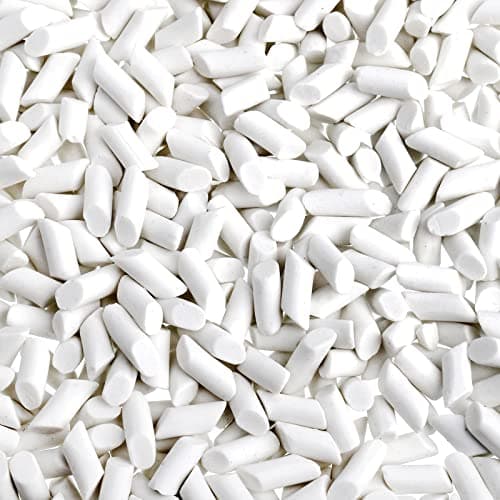 See price on AmazonAmazon
Hiceeden ceramic media, 1/5 x 2/5 in cylinders, 8 lb
From Best ceramic media for rock tumbling: sizes and how much to buy
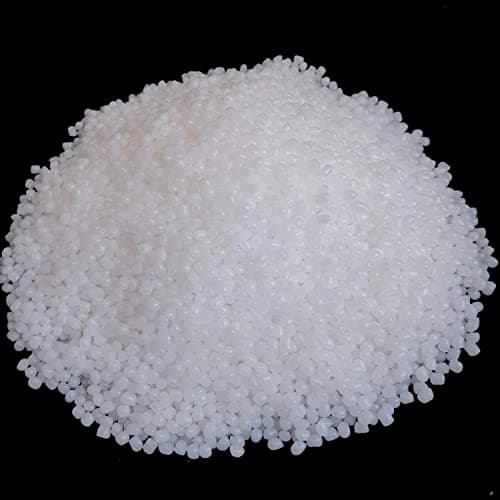 See price on AmazonAmazon
Tonmp plastic pellets tumbling media, 3 lb
From Best plastic pellets for rock tumbling and when to use them
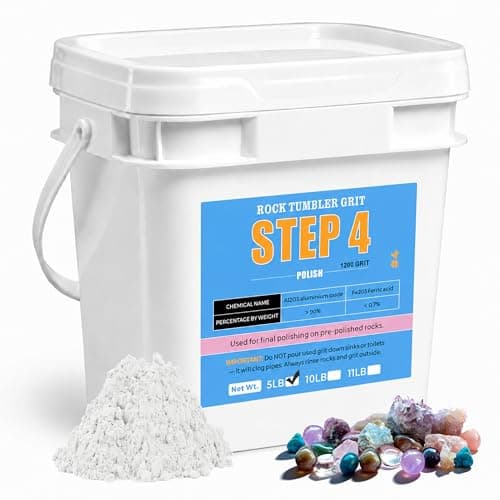 See price on AmazonAmazon
KomeStone 1200 aluminum oxide polish, step 4, 5 lb
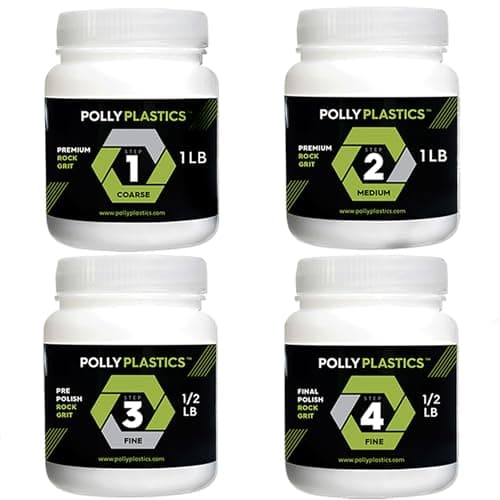 See price on AmazonAmazon
Polly Plastics 4-step grit and polish kit, 3 lb