How-to
Rock tumbling agates: grit, times and common problems
Published
Short answer
Agate is about Mohs 7 and tumbles to a bright polish on the standard four steps: coarse 60/90, medium 150/220, fine 500 or 600, then polish, each with about 2 level tablespoons per pound of rock. The slow part is step 1. Pitted or jagged agates need 2 to 4 one-week coarse runs, so a batch takes about 5 to 8 weeks.
Agate is one of the easiest stones to polish and one of the slowest to shape. It is hard, dense and fine-grained, which is exactly what a tumbler needs, but that hardness also means coarse grit removes it slowly. Found agates, including Lake Superior and beach agates, add a second problem: a pitted, bruised skin and old fractures from their trip through ice, rivers and surf. The schedule below is for a rotary tumbler. The result depends on two things: staying in step 1 until the pits are gone, and keeping coarse grit out of the later steps.
What makes agate easy or hard to tumble
Agate is banded chalcedony: quartz in crystals too small to see, packed tight with no grains to pull out. At about Mohs 7 it wears evenly, stands up to the knocks in a barrel and takes a bright polish. It can share a load with jasper, quartz, aventurine, tiger's eye and petrified wood. The rock tumbling hardness chart lists the full group.
The hard part is shaping. Agate gives up material slowly, so broken faces, deep pits and the bruised skin on water-worn agates take weeks of coarse grit to remove. Old fractures are the other weak point. A cracked agate can split mid-run, and the sharp halves scratch everything around them.
Agate tumbling schedule by step
This is the standard rotary schedule with agate's longer step 1. Grit amounts are per pound of rock, with any ceramic media counted as rock. A 3 lb barrel holds about 2 lb of rock, so it takes about 4 tablespoons. For other barrel sizes use the grit calculator.
| Step | Grit | Amount | Time | Move on when |
|---|---|---|---|---|
| 1 Coarse | 60/90 silicon carbide | 2 level tablespoons per pound | 7 days per run, 2 to 4 runs for pitted or jagged agate | Rounded, with no pits, cracks or flat broken faces |
| 2 Medium | 150/220 silicon carbide | 2 level tablespoons per pound | About 7 days | Smooth and evenly matte, no coarse scratches |
| 3 Fine / pre-polish | 500 or 600 silicon carbide | 2 level tablespoons per pound | About 7 days | Dry stones look satin and feel silky |
| 4 Polish | Aluminum oxide polish | 2 level tablespoons per pound | 7 to 10 days | Dry stones shine |
| 5 Burnish (optional) | Grated bar soap or borax, no grit | About 1/2 tablespoon per pound | 1 hour to 1 day | Rinse water runs clear |
Agate start to finish: how to run the batch
Each step follows the same routine: load, run, rinse, inspect. Only move stones forward when they pass the check for that step.
- 1
Sort the rough. Set aside any agate with a crack that catches a fingernail. For a 3 lb barrel, mix sizes from about 1/4 inch to 1 1/2 inches so the load rolls instead of sliding.
- 2
Load for step 1. Fill the barrel about 2/3 full, add 2 level tablespoons of coarse grit (step 1, 60/90) per pound of rock, then water to just below the top layer of rocks. Run for 7 days.
- 3
Rinse and inspect every stone dry, under good light. Move rounded, pit-free agates to a holding tub. Return the rest to fresh coarse grit for another 7 days, topping the barrel back up to 2/3 with new rough or ceramic media.
- 4
When the whole batch passes, wash the stones, barrel, lid and lid seal until no grit is left. Run medium grit (step 2, 150/220) for about 7 days, with ceramic media added to keep the barrel 2/3 full.
- 5
Clean everything again and run fine grit (step 3, 500 or 600) for about 7 days. Dried stones should look satin and feel silky before they go on.
- 6
Clean once more and run polish (step 4) for 7 to 10 days. For extra brightness, finish with a burnish: grated bar soap or borax, no grit, for 1 hour to 1 day.
How long does step 1 take for pitted agates?
Plan on 2 to 4 runs of 7 days. Coarse grit breaks down as it works and is spent mud after a week, so one longer run does not help. Each run needs a fresh charge of grit. Lake Superior agates are very hard and are commonly kept in coarse grit for up to four weeks. Smooth beach agates are no shortcut: their rounded skin is bruised and pitted, and it has to come off too.
Judge by the stone, not the calendar. Step 1 is finished for an agate when it is rounded and has no pits, cracks or flat broken faces. Later steps only remove the scratches of the step before, so a pit that survives step 1 is still there after polish. With the extra coarse runs, a batch of agates takes about 5 to 8 weeks instead of the usual 4 to 6. See how long to tumble rocks for the timing of each step.
Note.Used coarse grit cannot be reused. Let the slurry settle or dry in a bucket and put the solids in the trash. Never pour it down a drain.
Common problems: pits, fractures and dull bands
Most agate failures trace back to step 1 or to grit carried between steps. Match what you see to a row below. The wider checklist for a failed polish is in why tumbled rocks are not shiny.
| What you see | Likely cause | What to do |
|---|---|---|
| Scratches after polish, gray specks in pits | Pits carried coarse grit into the later steps | Return pitted stones to coarse grit. Scrub pits with a toothbrush between steps. |
| A stone split and the load is scratched | An old fracture opened and the sharp pieces gouged the rest | Pull the pieces, send them back to step 1 and repeat the current step for the rest. |
| Some bands stay matte while the rest shines | Porous or weathered bands and crystal-lined pockets do not polish like dense agate | More polish time rarely changes it. Keep the stone as it is or cull it. |
| Whole batch is hazy or not shiny | Fine grit step cut short, or grit carried into the polish | Go back to fine grit for a full 7-day run and clean everything. |
| Chipped or bruised edges | Barrel under half full, so the stones slam instead of roll | Bring the load up to about 2/3 with ceramic media. |
Which rock tumbler works for agates?
Any rotary tumbler will polish agates. Rotary barrels do the shaping, and step 1 is where agates spend most of their time. A vibratory tumbler cannot shape rough. It can take over after step 1 and finish steps 2 to 4 in about 2 to 3 days each, checked daily, with the bowl maker's chart as the final word on grit and water.
Kit tumblers that come with grit packets work too. Follow the kit manual for packet amounts, and expect better shape when step 1 runs longer than the manual's minimum. That usually means buying extra coarse grit, since kits are set up for one packet per step. Rotary vs vibratory rock tumbler covers the trade-offs.
Quick answers
Short answers on agates and the tumblers that suit them. The schedule table above has the grit, amount and time for every step.
- Can you rock tumble agates? Yes. Agate is about Mohs 7, dense and fine-grained, and is one of the best stones for a tumbler. It only asks for a long coarse step.
- How long does rock tumbling agate take start to finish? About 5 to 8 weeks in a rotary tumbler: 2 to 4 weeks of coarse grit, about a week each of medium and fine, and 7 to 10 days of polish.
- What rock tumbler is best for agates? A rotary tumbler, because agates need weeks of shaping. A rubber barrel is quieter than a hard plastic one over a long run.
- How do you polish agates without a rock tumbler? By hand, with wet silicon carbide sandpaper in finer and finer grits, then a polish on cloth or felt. It works for a few stones but is slow on rock this hard.
What you need for this
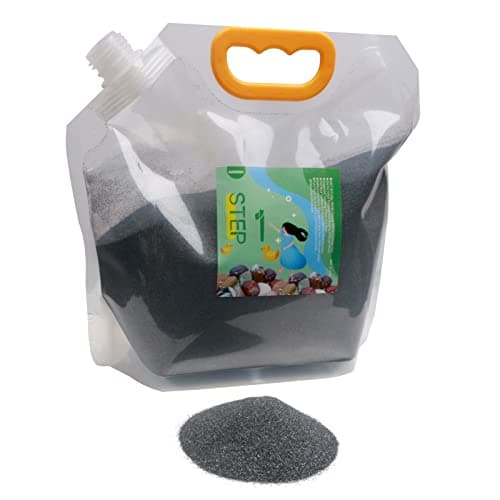 See price on AmazonAmazon
GANGOU coarse grit 60/90, 5 lb in resealable bags
From Best coarse rock tumbler grit: 60/90 silicon carbide for step 1
 See price on AmazonAmazon
Polly Plastics 4-step grit and polish kit, 3 lb
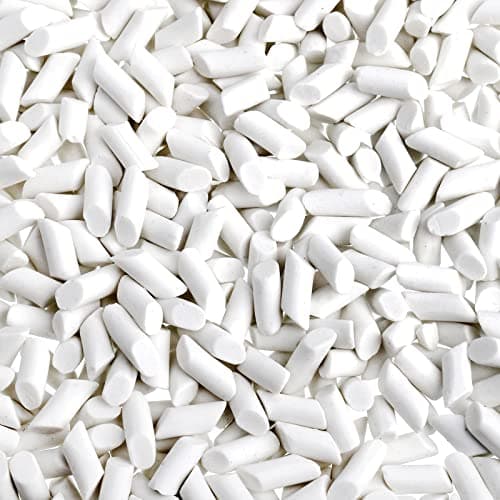 See price on AmazonAmazon
Hiceeden ceramic media, 1/5 x 2/5 in cylinders, 8 lb
From Best ceramic media for rock tumbling: sizes and how much to buy
 See price on AmazonAmazon
KomeStone G1 rock tumbler kit, 4 lb rubber barrel
From Best rock tumblers for adults: hobby-grade rotary machines