How-to
Rock tumbling Petoskey stones and other soft rocks
Published
Short answer
You can rock tumble Petoskey stones, but it is a compromise. They are fossil coral made of calcite, about Mohs 3, and a standard four-step run grinds them away. The usual method is hand sanding with 220, 400 and 600 grit wet sandpaper, then hand polishing on cloth. If you tumble, run them alone, skip coarse grit, cushion heavily and check every day.
Silicon carbide grit is about Mohs 9 to 9.5, and the standard schedule is timed for rock around Mohs 7. Calcite is far softer, so a week of coarse grit that barely rounds an agate can take a large share of a Petoskey stone and blur the coral pattern people want to show. Soft stone also scratches and bruises easily at the polish step, which is why the finish out of a barrel rarely matches a stone polished by hand. This page covers both routes, gives the tumbler schedule as ranges, and applies the same rules to other soft rocks such as calcite, fluorite and malachite.
Can you use a rock tumbler for Petoskey stones?
Yes, with limits. A Petoskey stone is fossil colonial coral preserved as calcite, the mineral that makes limestone, at about Mohs 3. Most beach-found stones are already rounded by waves, so they do not need shaping at all. What they need is a smooth surface and a polish, and a tumbler is a blunt tool for that on stone this soft.
Three things go wrong on the standard recipe. Coarse grit (step 1, 60/90) removes calcite so fast that small stones shrink noticeably within days. Any harder rock in the load, even a few agates, grinds the Petoskey stones away. And at the polish step soft stones mark each other on every impact, so the surface stays hazy. The hardness chart shows where each rock sits.
Note.Never mix hard and soft stones in one load. Petoskey stones tumble only with other calcite or limestone pieces and non-abrasive media.
Hand sanding or tumbling: which route to pick
Hand sanding and hand polishing is the usual method for Petoskey stones, and it gives the better finish. Tumbling is a compromise. It earns its place when there are too many stones to sand one by one, or when the stones are small and ordinary enough that a satin finish is acceptable. A common middle route uses the tumbler only for smoothing and finishes the polish by hand.
| Point | Hand sanding and polishing | Tumbling |
|---|---|---|
| Finish | Glossy, with the pattern sharp | Satin to a soft shine, rarely glassy |
| Time | About 1 to 2 hours per small stone | About 3 to 5 days of short runs, then polish |
| Control | You see the surface the whole time | You only see it at each check |
| Main risk | Low: light pressure, stone kept wet | Stones shrink, bruise or lose pattern if left too long |
| Best for | A few good stones | A large pile of small or ordinary stones |
How to hand sand and polish a Petoskey stone
The supplies are simple: wet/dry sandpaper in three or four grits, a bowl of water, polish powder and a scrap of sturdy cloth. Work wet the whole time. Water carries the cut stone away, keeps the paper from clogging and keeps dust out of the air.
- 1
Wet the stone and look at the pattern. Only if the surface is rough or pitted, start with coarse wet/dry sandpaper around 80 grit and light pressure. Calcite cuts fast, so stop as soon as the surface is even.
- 2
Sand the whole surface with 220 grit wet/dry sandpaper, keeping the stone and the paper wet. Rinse and dry it. Any scratch or white spot you can see on the dry stone needs more work at this grit.
- 3
Repeat with 400 grit, then 600 grit, rinsing between grits so no coarse particles carry over. After 600 grit the dry stone should look smooth and satin, with no visible scratches.
- 4
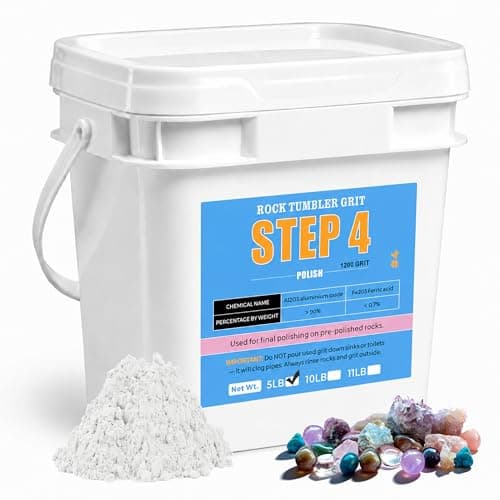
Put a little polish powder on a damp piece of corduroy, denim or velvet. Aluminum oxide polish is common, and tin oxide or cerium oxide are also used. Rub the stone with short, firm strokes until it shines.
- 5
Rinse off the polish residue and dry the stone. Expect about 1 to 2 hours in total for a small stone, and longer for a large or pitted one.
Soft-stone tumbler schedule for Petoskey stones
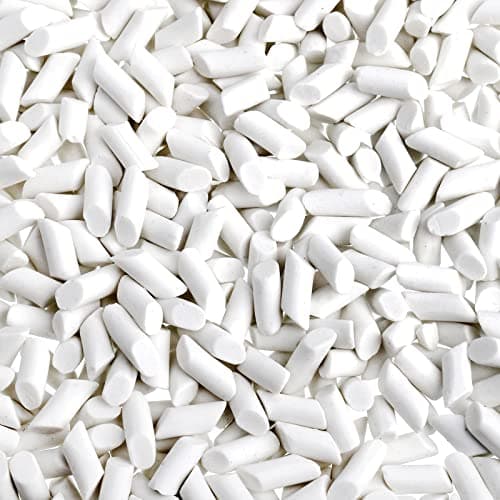
Load the barrel 2/3 to 3/4 full and make up to half of the load ceramic media or plastic pellets, so the stones are cushioned on every side. Ceramic media vs plastic pellets explains the difference. Use about 2 level tablespoons of grit per pound of stone and media, or work it out with the grit calculator. Add water to just below the top layer. Open the barrel every 24 hours, rinse a stone, dry it and decide whether to keep going.
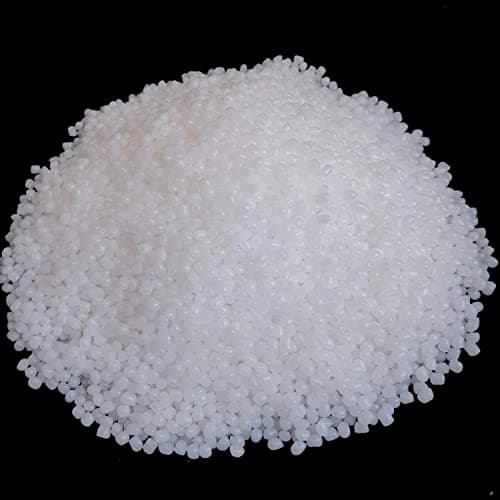
The polish step is the weak point. One known alternative is a dry polish in a vibratory tumbler with corn cob media and polish powder for about a day. In a rotary barrel, use plastic pellets kept for polish only, check daily and stop when the shine stops improving. If the stones come out hazy, finish them by hand on cloth as in the steps above.
| Step | Grit | Run time | Notes |
|---|---|---|---|
| Coarse (step 1) | None | Skip | Beach stones are already rounded; coarse grit only removes stone |
| Medium (step 2) | 150/220 silicon carbide | 1 to 2 days, optional | Only for scratched or uneven stones |
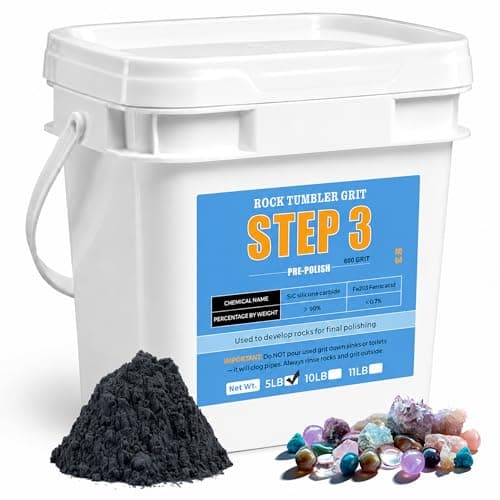
| Fine (step 3) | 500 or 600 silicon carbide | 1 to 2 days | Stop when dry stones look satin |
| Extra fine | 1000 grit, if you have it | About 1 day | Narrows the gap before polish |
| Polish (step 4) | Aluminum oxide polish | Short run, checked daily | Or polish by hand on cloth for a better shine |
How to tell a Petoskey stone is done
Check dry stones, not wet ones. A wet Petoskey stone always shows its pattern clearly, which is why it looks finished in the rinse bucket and dull an hour later. A finished stone shows the six-sided coral cells with their dark centers while completely dry, and reflects a light as a soft, even gloss with no scratches crossing the pattern.
Stop a tumbler run early if the stones are getting visibly smaller, if the pattern is fading at the edges, or if white impact marks appear. Those are signs of too much time or too little cushioning. Going back means a short fine grit run or a pass with 600 grit paper, then polish again.
Tumbling other soft rocks: calcite, fluorite, malachite
The same method works for any stone well under Mohs 6. Tumble each soft material in its own load, skip or sharply shorten coarse grit, cushion heavily and check often. Many hobbyists skip coarse grit for these stones entirely and start at medium or fine grit.
Obsidian sits between soft and hard rock and has its own page: rock tumbling obsidian. Soft stone turns to mud quickly, so the slurry thickens within a day or two. Never pour it down a drain: see how to dispose of slurry.
| Stone | Mohs hardness | How to tumble |
|---|---|---|
| Calcite, Petoskey stone, limestone | About 3 | Own load, no coarse grit, runs of 1 to 2 days, or polish by hand |
| Malachite | 3.5 to 4 | Own load, start at medium or fine grit, check daily |
| Fluorite | 4 | Own load, heavy cushioning, start at medium or fine grit, check daily |
| Obsidian and glass | 5 to 5.5 | Brittle more than soft: fuller barrel, lots of media, short coarse run |
Quick answers
Short answers on Petoskey stones and soft rocks. Hand sanding is the usual method, and every tumbler time here is a range to check daily.
- Can you rock tumble Petoskey stones? Yes, but only in their own load, without coarse grit, on runs of 1 to 2 days per step. Expect a satin finish, not the gloss of a hand polished stone.
- Can you use a rock tumbler for Petoskey stones mixed with other rocks? No. Agate, jasper and quartz are around Mohs 7 and grind calcite at Mohs 3 away.
- What grit works for tumbling softer rocks? Skip coarse grit. Start at medium (150/220) or fine (500 or 600) and keep the runs short.
- What sandpaper polishes a Petoskey stone by hand? Wet/dry paper in 220, 400 and 600 grit, then polish powder on damp corduroy, denim or velvet.
What you need for this
 See price on AmazonAmazon
KomeStone pre-polish grit 600, step 3 refill, 5 lb
 See price on AmazonAmazon
KomeStone 1200 aluminum oxide polish, step 4, 5 lb
 See price on AmazonAmazon
Hiceeden ceramic media, 1/5 x 2/5 in cylinders, 8 lb
From Best ceramic media for rock tumbling: sizes and how much to buy
 See price on AmazonAmazon
Tonmp plastic pellets tumbling media, 3 lb
From Best plastic pellets for rock tumbling and when to use them